
English
English
Views: 0 Author: Site Editor Publish Time: 2026-08-03 Origin: Site


Selecting the wrong alloy for your machined parts carries heavy business risks. A poor material choice dictates faster tool wear, compromises surface finishing quality, and ultimately ruins long-term part reliability. You must get this fundamental decision right before production begins. Engineers universally favor aluminum for its exceptional strength-to-weight ratio and general ease of cutting. However, specific alloying elements like magnesium, silicon, and zinc drastically alter manufacturing outcomes on the shop floor. Choosing a highly alloyed grade might solve a strength requirement but severely inflate your tooling budget. This guide breaks down the core aluminum grades used in modern manufacturing. We provide a pragmatic framework to match material specifications directly to your specific project requirements. You will learn exactly how to balance mechanical performance, aesthetic needs, and machining constraints without over-engineering your components.
6061-T6 is the industry baseline—offering the best balance of machinability, cost, and weldability for 80% of general-purpose applications.
7075-T6 rivals structural steel in yield strength but carries a premium cost and requires specific anodizing considerations.
6063 excels in architectural applications requiring exceptional surface finishes, though it presents distinct chip-control challenges during machining.
Partnering with reputable aluminum CNC machining services that provide strict material certification (MTRs) is critical to ensuring the correct temper and alloy chemistry.
Aluminum remains the default material choice for both rapid prototyping and full-scale manufacturing. It offers excellent thermal conductivity, low density, and non-magnetic properties. These traits make it incredibly versatile across the aerospace, automotive, and consumer electronics sectors. Beyond physical traits, its inherent workability keeps machine cycle times remarkably fast. When you compare it directly to steel or titanium, aluminum significantly reduces wear on machine spindles and cutting tools. This efficiency translates directly into lower part costs.
However, you must understand the critical relationship between machinability and cost. While aluminum is generally softer than steel, softer does not always mean easier to machine. Improper grade selection often leads to gummy chips during the milling process. These long, stringy chips wrap around endmills and cause a phenomenon called built-up edge (BUE). Built-up edge ruins tool geometries and forces operators to slow down feed rates. When cycle times increase, your manufacturing costs skyrocket. You must select Aluminum Alloys for CNC Machining that balance base hardness with clean chip formation.
Furthermore, the material temper matters just as much as the base chemistry. Designations like "-T6" or "-T4" define the heat treatment state of the metal. For example, a T6 temper indicates the metal was solution heat-treated and artificially aged. This process dramatically increases yield strength and improves chip breaking during machining. You must always specify the temper alongside the alloy grade. The heat treatment state is often the defining factor for a part's structural success.
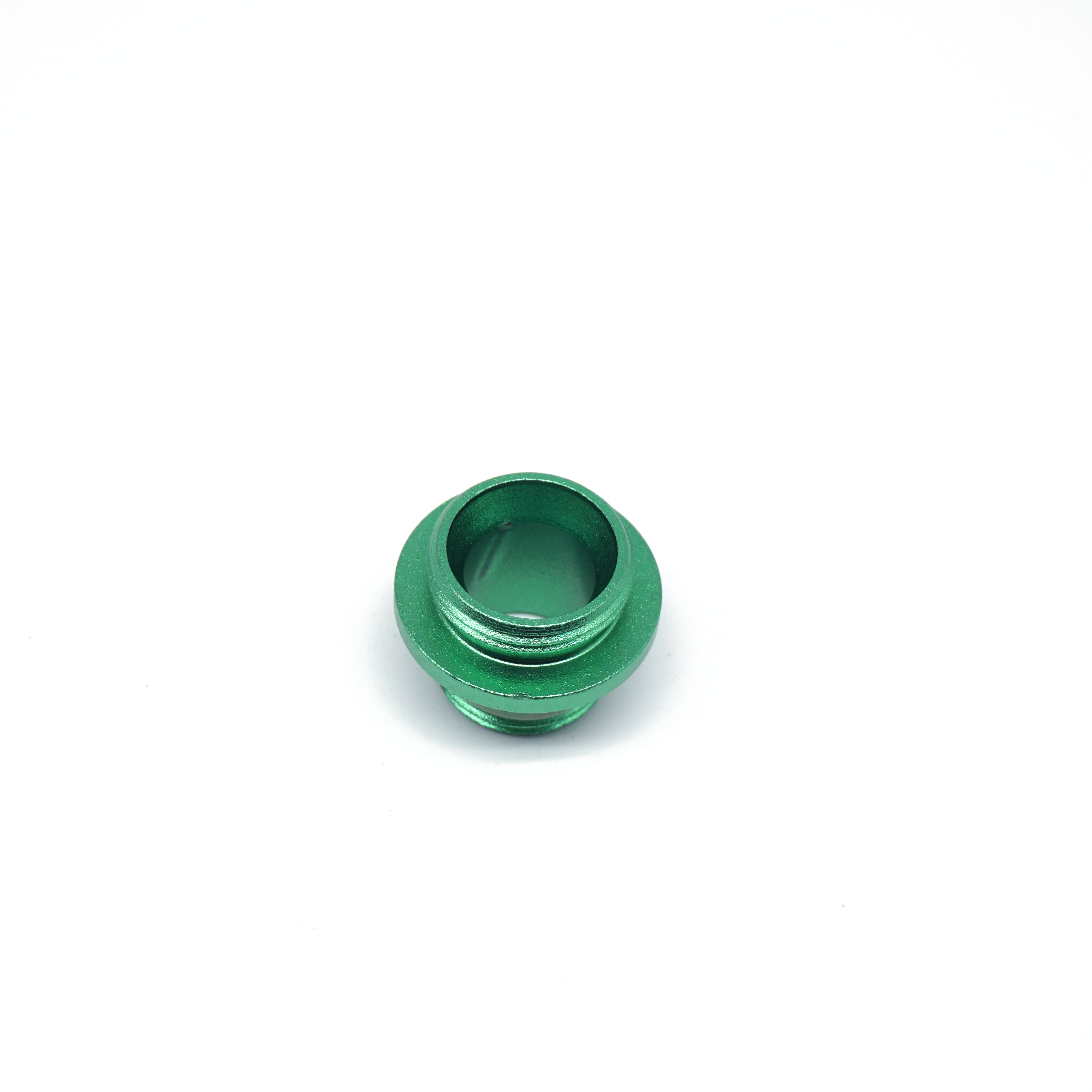
To make informed design decisions, you need to understand the specifications, primary use cases, and shop-floor realities for each major grade.
This magnesium and silicon alloy serves as the backbone of modern manufacturing. It delivers medium-to-high strength, excellent corrosion resistance, and reliable workability.
Machining Reality: 6061 aluminum CNC machining produces highly consistent, easily clearable chips. It maintains manageable tool wear and holds tight geometric tolerances exceptionally well. Operators love it because it behaves predictably across various spindle speeds.
Best For: General aerospace components, automotive fixtures, bicycle frames, and custom electronic enclosures.
Limitations: It lacks the extreme yield strength required for highly stressed structural load paths.
This heavily zinc-alloyed material boasts an extremely high yield strength that actually rivals some structural steels. It provides exceptional fatigue resistance for demanding environments.
Machining Reality: 7075 aluminum CNC machining requires highly rigid workholding setups. It machines very cleanly and produces crisp, short chips. However, the high zinc content makes it abrasive. This accelerates cutting tool wear significantly compared to standard 6000-series alloys.
Best For: Aerospace structural bulkheads, high-wear precision gears, and ruggedized military equipment.
Limitations: It exhibits poor weldability. It is also highly susceptible to galvanic corrosion if you do not apply proper protective coatings.
Often used in extrusion processes, this alloy features lower strength than 6061 but offers superior formability and unmatched finishing characteristics.
Machining Reality: 6063 aluminum machining can feel quite "gummy" during heavy roughing passes. Operators must use extremely sharp, polished flute tooling and high-pressure coolant. This setup prevents chips from re-cutting and damaging the surface.
Best For: High-end architectural hardware, heat sinks, and custom extrusions requiring secondary post-machining.
Limitations: It has lower tensile strength. It also requires careful handling on the shop floor to prevent surface marring prior to anodizing.
You should also recognize two specialty grades that fulfill very specific engineering niches.
2024 Aluminum: This is a copper-alloyed grade. It delivers superb fatigue resistance for aerospace skins. However, it suffers from terrible corrosion resistance. You must specify Alclad layers or aggressive chemical coatings to protect it.
5052 Aluminum: This alloy excels in sheet metal bending and harsh marine environments. Yet, it proves highly problematic for precision milling. Its inherent softness causes severe chip smearing and poor dimensional stability during aggressive cutting.
Choosing between these top three contenders requires balancing mechanical demands against budgetary constraints.
Many engineers fall into the "over-engineering" trap. They default to the strongest material available without checking the price tag. You must understand the cost multiplier. Generally, 7075 raw material runs 30% to 40% more expensive than standard 6061. Furthermore, increased tool wear drives the machining costs even higher. We strongly advise against specifying 7075 unless your strength-to-weight requirement strictly dictates it. For 80% of general mechanical assemblies, 6061 provides more than enough yield strength at a fraction of the cost.
Your chosen alloy profoundly impacts the final cosmetic outcome, especially during anodizing. The 6061 alloy accepts standard Type II color anodizing uniformly. It yields predictable, vibrant colors. If you need a flawless, mirror-like aesthetic finish, 6063 stands undefeated. Its grain structure takes surface treatments beautifully. Conversely, 7075 presents major cosmetic challenges. Due to its high zinc and copper content, 7075 often appears yellowish, splotchy, or undesirably dark after hardcoat (Type III) anodizing. Do not specify 7075 for visible cosmetic panels.
If your assembly requires post-machining welding, your material choice becomes rigid. Both 6061 and 6063 are easily weldable using standard TIG or MIG processes. They maintain reasonable strength in the heat-affected zone. On the other hand, 7075 is notoriously prone to micro-cracking during welding. You should strictly avoid welding 7075. Always join 7075 components mechanically using rivets, bolts, or structural adhesives.
Comparison Chart: 6061 vs 7075 vs 6063 Aluminum
Alloy Grade | Relative Cost | Yield Strength (T6) | Machinability | Anodizing Aesthetic | Weldability |
|---|---|---|---|---|---|
6061 | Baseline ($) | ~40,000 psi | Excellent | Good / Uniform | Excellent |
7075 | Premium ($$$) | ~73,000 psi | Good (Accelerates tool wear) | Poor / Splotchy | Not Recommended |
6063 | Moderate ($$) | ~31,000 psi | Fair (Can be gummy) | Exceptional | Excellent |
Even the perfect material choice fails if the part design ignores fundamental manufacturing realities. You must design components to accommodate aluminum's unique behavioral quirks during milling.
Aluminum rapidly absorbs heat during the cutting process. Aggressive material removal on thin-walled parts causes internal stress relief. As these hidden stresses release, the part warps upon removal from the vise. To mitigate this risk, you must implement specific manufacturing strategies.
Leave excess material: Program aggressive roughing passes while leaving 0.5mm of stock on all faces.
Normalize the part: Allow the component to cool and relieve internal stresses naturally.
Apply secondary heat treatments: Sometimes, thermal cycling is necessary before the final finishing pass.
Use low-stress plates: Consider cast tool-and-jig plates (like MIC-6) for large, flat fixtures to eliminate inherent rolling stresses.
Creating internal threads in softer alloys poses significant functional risks. Stripping threads is highly common in softer grades like 6063 or 5052. When designing load-bearing assemblies, do not rely on raw tapped aluminum threads for high-cycle fasteners. You must specify the installation of helicoils or solid threaded inserts. These inserts distribute the mechanical load safely and prevent the softer aluminum threads from tearing out under tension.
Designers frequently forget that while aluminum cuts easily, geometric constraints still govern costs. Sharp internal corners require operators to use very slow, small-diameter endmills to clear out the final material. This single feature drives up cycle times regardless of the alloy. You should always specify the largest internal corner radii your assembly can tolerate. A standard rule of thumb is a radius equal to at least one-third of the cavity depth. This allows machinists to use rigid, high-feed tooling.
Your engineering specs only matter if your manufacturing partner executes them accurately. Evaluating vendor capabilities prevents costly downstream failures.
The global market unfortunately harbors counterfeit and sub-prime imported aluminum stock. Using unverified material introduces hidden flaws, inconsistent tempers, and unexpected tool breakage. Reputable aluminum CNC machining services completely eliminate this risk. They must provide official Mill Test Reports (MTRs) and verifiable material certificates for every batch. These documents prove the chemical composition and heat treatment state match your exact requirements.
A reliable manufacturing partner utilizes modern coolant strategies. Flood coolant and high-pressure air blasts are mandatory to prevent built-up edge (BUE) when cutting non-ferrous metals. Furthermore, inspect their tooling choices. The best shops utilize highly polished, uncoated carbide tooling specifically engineered for aluminum. They avoid generic coated tools designed for steel, which often create unnecessary friction and heat.
Finally, tight-tolerance aluminum components require rigorous validation. Look for vendors equipped with advanced metrology gear. They should outline inspection criteria using Coordinate Measuring Machines (CMM) for geometric true-positioning. They also need proper surface roughness testers (profilometers) to guarantee the RA (Roughness Average) values meet your aesthetic and functional sealing requirements.
Mastering aluminum material selection streamlines your entire product development cycle. By aligning your material chemistry with your specific mechanical goals, you reduce waste and improve part longevity.
Summary: Always treat 6061 as your safest, most cost-effective default. Reserve 7075 for situations demanding uncompromising structural strength. Specify 6063 only when flawless cosmetics or post-machining extrusions dictate the design.
Actionable Next Step: Before requesting your next manufacturing quote, force your team to finalize mechanical requirements. Define your exact stress loads, environmental exposures, and cosmetic expectations upfront. This ensures you never pay a premium for material properties you simply do not need.
A: Only if the application involves high structural stress or weight-reduction constraints where 6061 would fail. Otherwise, no. The increased raw material cost and accelerated tool wear make 7075 an unnecessary expense for standard brackets, enclosures, or low-stress fixtures.
A: Yes, but the high zinc content makes precise color matching very difficult. It often results in darker, yellowish, or slightly tinted finishes compared to the uniform, vibrant colors easily achieved with 6061 aluminum. Avoid 7075 for purely cosmetic parts.
A: Warping occurs when internal material stress releases during heavy milling operations. Aggressive material removal on thin walls causes the part to distort. It requires using stress-relieved plates (e.g., MIC-6) or implementing careful roughing operations followed by a rest period before final finishing.
A: 7075 holds raw threads best due to its superior hardness and high yield strength. However, 6061 is perfectly adequate for standard use. Regardless of the alloy, you should always use stainless steel helicoils or threaded inserts for high-cycle fastening applications.
