
English
English
Views: 0 Author: Site Editor Publish Time: 2025-11-03 Origin: Site


Swiss CNC technology has revolutionized the world of precision machining, offering unmatched accuracy and quality in manufacturing. This technology is widely used to produce components with extremely tight tolerances, making it ideal for industries that demand high precision, such as aerospace, automotive, and medical device manufacturing. High tolerance is critical because even the smallest error in these fields can lead to performance issues, safety concerns, or even product failure. Swiss CNC machines excel in achieving these high tolerances, often down to microns, by using advanced capabilities like multi-axis machining and automated tool adjustments. Unlike traditional CNC machines, Swiss technology offers enhanced precision, speed, and versatility, allowing manufacturers to produce intricate, complex parts more efficiently. The ability to consistently maintain tight tolerances across large production runs ensures high-quality results and reduces the risk of defects, making Swiss CNC machining a preferred choice for industries where quality and reliability are non-negotiable.
Swiss CNC machines achieve ultra-tight tolerances, often as precise as ±0.01mm, through advanced programming and real-time micro-adjustments. This ensures parts are made to exact specifications with minimal variation, ensuring superior quality compared to traditional machining.
Swiss CNC machines utilize multi-axis capabilities, allowing them to move the cutting tool across multiple axes simultaneously. This results in the creation of intricate geometries with greater accuracy and fewer errors, reducing the need for multiple setups and improving consistency.
Swiss CNC machining uses specialized tooling and high-quality materials to improve part consistency and reduce defects. Precision tools like carbide inserts and high-speed steel cutters, combined with premium materials, ensure durable and reliable parts with excellent surface finishes.
Automation in Swiss CNC machining reduces human error and enhances production consistency. Automated systems control parameters such as feed rates and tool changes, ensuring uniform results across batches and reducing the need for rework, thus improving overall efficiency and quality.
Machining hard materials such as titanium, stainless steel, and advanced alloys presents a significant challenge in maintaining tight tolerances. These materials often exhibit varying properties like hardness, grain structure, and thermal conductivity, which can lead to issues like tool wear or distortion. The inconsistency in material behavior can result in suboptimal cuts, affecting part quality and machining time.
Swiss CNC machining overcomes these challenges by employing specialized tooling, advanced cooling techniques, and adaptive control systems that adjust machining parameters in real-time. These features help accommodate material inconsistencies, ensuring high precision even when working with difficult-to-machine materials. The precision of Swiss CNC allows manufacturers to achieve high-quality parts without compromising on machining time, even when faced with material variations.
Achieving high tolerance in CNC machining heavily relies on the precision of machine setup and calibration. Any misalignment, vibration, or inconsistency during setup can introduce errors, leading to variations in part dimensions and compromising quality. A failure to properly set up and calibrate machines can result in parts that do not meet required tolerances, increasing waste and rework time.
Swiss CNC technology mitigates setup-related errors by utilizing highly automated setups and advanced calibration systems, ensuring that the machine is perfectly aligned before each production run. Regular calibration checks maintain machine accuracy, preventing part inconsistencies during long production runs. This ensures that parts remain consistent, even in large-scale manufacturing processes, reducing defects and improving overall production efficiency.
Machining complex geometries such as internal features, multi-axis contours, or deep cavities is a significant challenge for conventional CNC systems. These designs require precise tool control and continuous adjustment during the cutting process to maintain high tolerance. Without proper handling, such parts may experience dimensional errors or surface defects that can undermine their functionality.
Swiss CNC machining, with its multi-axis capabilities, excels in handling complex parts. The ability to simultaneously control multiple axes allows for the creation of sophisticated shapes and fine details without the need for reorientation or multiple setups. This capability reduces errors and ensures the accuracy required for intricate, high-quality parts. By minimizing the risk of tool collisions and rework, Swiss CNC machining delivers precision and reliability in every step of the production process.
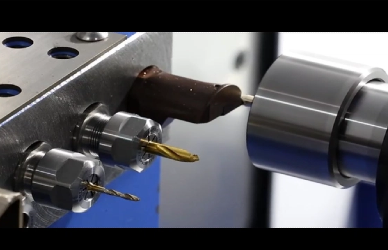
Swiss CNC machines minimize human error by automating key processes such as material feeding, tool changes, and real-time monitoring. This automation ensures consistent, precise machining by continuously tracking operations and adjusting if any deviations occur, reducing misalignments and inconsistent measurements typically caused by manual intervention.
Swiss CNC machines ensure part repeatability, even in large batches. Advanced programming and controls allow machines to produce identical parts with exact specifications after the first part is successfully made. The system stores complex machining parameters, ensuring that each part remains consistent throughout high-volume production runs, even for intricate and tight-tolerance components.
Equipped with sensors and feedback systems, Swiss CNC machines monitor every step of the process. Real-time data is used to adjust machining parameters, such as speed and feed rates, ensuring consistency and correcting issues like tool wear or material inconsistencies before they impact part quality. This data-driven approach maintains high standards and optimizes the process continuously.
Built-in quality monitoring tools track part dimensions, surface finishes, and tool conditions throughout the machining process. Deviations are flagged immediately, ensuring that corrective actions are taken before defective parts are produced. This proactive monitoring helps reduce scrap rates and maintains high-quality standards across production runs.
Swiss CNC machining can achieve incredibly tight tolerances, typically as precise as ±0.01mm. This level of precision is particularly crucial for industries like aerospace, automotive, medical device manufacturing, and high-precision engineering. The ability to achieve such exact tolerances ensures that parts fit perfectly and perform reliably, reducing the risk of failure and ensuring the highest quality standards.
Swiss CNC machines are equipped with advanced multi-axis capabilities, allowing them to handle complex, intricate geometries with ease. These machines are capable of performing continuous, multi-directional cuts that adapt to the part's shape throughout the machining process. This flexibility makes Swiss CNC technology ideal for producing components with complex features, such as turbine blades, medical implants, or automotive parts, where precision and detail are paramount.
Swiss CNC machining excels with a broad range of materials, including hard metals like titanium, high-strength steel, stainless steel, aluminum alloys, and advanced composites. These materials are often challenging to machine due to their hardness or brittleness, but Swiss CNC machines handle them effectively. The ability to precisely machine such materials ensures the production of high-quality, durable parts, even under demanding conditions or with tight tolerances.
Yes, Swiss CNC machining is designed to minimize manufacturing defects, making it an ideal solution for high-volume production. Automated processes and real-time error monitoring continuously check for inconsistencies during production, allowing for immediate corrections if needed. With its high precision and repeatability, Swiss CNC technology helps reduce defects, ensuring consistency across all parts in a batch. This makes it particularly valuable for industries that require flawless, mass-produced components, where quality control is crucial to maintaining product reliability.
Swiss CNC machining significantly enhances production efficiency by reducing cycle times while maintaining high precision. The advanced automation and multi-axis capabilities allow for faster, more accurate machining with fewer setups and retooling. Additionally, the ability to perform simultaneous cuts and maintain tight tolerances reduces the need for secondary operations, streamlining the manufacturing process. This results in faster turnarounds, reduced lead times, and increased throughput, all while ensuring consistent quality. This efficiency is particularly beneficial in high-volume production environments where meeting deadlines and cost targets is critical.
Swiss CNC machining offers significant advantages in improving tolerance and quality for precision manufacturing. Through its advanced precision capabilities, Swiss CNC machines can achieve tight tolerances down to ±0.01mm, ensuring high-quality parts for industries like aerospace, automotive, and medical device manufacturing. The multi-axis capabilities allow for complex geometries to be handled with ease, while automation reduces human error and ensures consistent production. As Swiss CNC technology continues to evolve, further advancements in machine design, data integration, and real-time monitoring are expected to enhance the precision and efficiency of machining processes even more. This constant progression will enable industries to push the boundaries of what’s possible, offering higher-quality parts, faster turnarounds, and greater cost efficiency in the future, paving the way for new applications, innovations, and more sustainable manufacturing practices across various sectors.
