Introduction
Bushings are essential components in mechanical systems, reducing friction and wear. A flanged bushing, with its added flange, offers enhanced stability and load support.
In this article, we will explore what a flanged bushing is, how it works, and why it’s crucial in many industries. You’ll also learn about the benefits and applications of custom bushings.
What is a Flanged Bushing?
Definition and Basic Structure
A flanged bushing is a type of bearing that consists of a cylindrical sleeve with a flange on one end. The flange acts as a shoulder, providing a means of securing the bushing within a housing. The cylindrical part of the bushing supports radial loads, while the flange helps manage axial (thrust) loads by preventing the bushing from shifting along the shaft.
Flanged bushings are available in various materials, including metals like steel and bronze, as well as plastics and composites. Each material offers specific advantages depending on the application requirements, such as durability, wear resistance, and corrosion resistance.
The Purpose of the Flange
The key feature of a flanged bushing is the flange, which serves multiple purposes. First, the flange prevents axial movement, ensuring that the bushing stays securely in place. This is particularly important in applications where components experience significant forces along the shaft’s axis.
Additionally, the flange simplifies assembly by providing a clear point of location. This allows for easier and faster installation, reducing the risk of improper alignment. In some cases, the flange can also act as a thrust surface, directly absorbing axial loads that would otherwise place strain on the shaft or housing.
How Does a Flanged Bushing Work?
Radial and Axial Load Support
Flanged bushings are designed to support both radial and axial loads. Radial loads are forces that act perpendicular to the shaft’s axis, and these are typically absorbed by the cylindrical part of the bushing. The bushing creates a smooth interface between the shaft and the housing, allowing for easy movement while reducing friction and wear.
The flange, however, is responsible for managing axial loads. These are forces that act parallel to the axis of the shaft. In the absence of a flange, axial forces could cause the shaft or bushing to shift or move, potentially leading to mechanical failure. By providing a stop against axial motion, the flange ensures that the bushing stays precisely in position, even under heavy loads.
Materials and Lubrication
Flanged bushings are made from a variety of materials to meet the specific needs of different applications. Metals like bronze, steel, and brass offer excellent strength and wear resistance, making them suitable for heavy-duty applications. Plastics and composite materials, on the other hand, provide advantages in terms of lighter weight, corrosion resistance, and sometimes self-lubrication.
In terms of lubrication, flanged bushings can either be self-lubricating or require external lubrication. Self-lubricating bushings often feature materials like graphite or PTFE, which reduce the need for regular maintenance and are ideal for applications where traditional lubrication is impractical. Pre-lubricated bushings, on the other hand, have oil or grease reservoirs that provide lubrication during operation, helping to reduce friction and prevent wear.
Material | Advantages | Common Applications |
Steel | High strength, wear-resistant | Heavy machinery, automotive |
Bronze | Good for high-load capacity, corrosion-resistant | Industrial equipment, aerospace |
Plastics | Lightweight, corrosion-resistant | Light-duty machinery, food industry |
Composites | Low friction, self-lubricating | Aerospace, robotics |
Advantages of Flanged Bushings
Enhanced Stability and Positioning
One of the main advantages of flanged bushings is their ability to provide precise axial positioning. The flange ensures that the bushing remains securely in place within the housing, preventing unwanted movement along the shaft. This is especially important in systems where components need to remain aligned to function correctly, such as in automotive suspension systems or industrial machinery.
The flange also simplifies the installation process by providing a clear point of location, reducing the likelihood of errors during assembly. This ease of installation, combined with the stability provided by the flange, makes flanged bushings a preferred choice in many engineering applications.
Reduced Wear and Tear
Flanged bushings are designed to absorb friction and wear, extending the lifespan of both the bushing and the surrounding components. By providing a smooth interface between the shaft and the housing, flanged bushings minimize the direct metal-to-metal contact that can lead to wear and tear. This helps reduce maintenance costs, as the components last longer and require fewer replacements.
In addition to reducing friction, flanged bushings help distribute forces evenly, which further minimizes wear. The smooth operation provided by the bushing ensures that the system remains efficient and reliable, even under heavy load conditions.
Versatility and Customization
Flanged bushings are highly versatile and can be customized to suit a wide range of applications. Depending on the specific needs of the system, flanged bushings can be made in various sizes, materials, and finishes. For example, bushings used in the food industry might need to be made from food-grade materials that are resistant to corrosion and contaminants. Similarly, bushings used in heavy machinery might need to be made from high-strength metals to withstand high loads.
The ability to customize flanged bushings makes them a flexible solution for many industries, from automotive and aerospace to manufacturing and agriculture.
Applications of Flanged Bushings
Automotive Industry
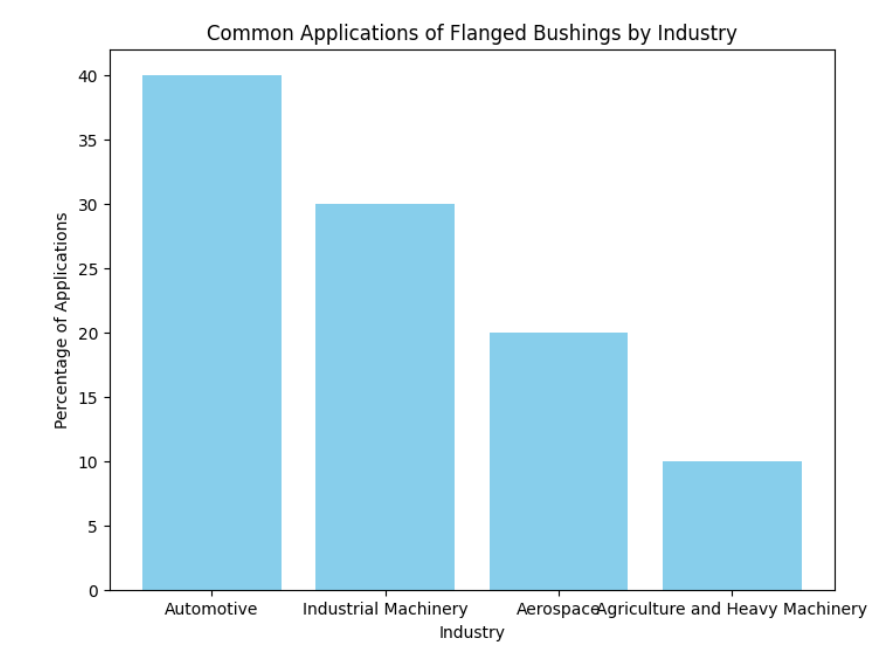
In the automotive industry, flanged bushings are used in a variety of applications, including suspension systems, steering columns, and engine mounts. In suspension systems, for example, the flanged bushing helps support the movement of suspension arms while also reducing vibrations for a smoother ride. The flange in the bushing prevents the suspension components from shifting, ensuring that the system remains aligned and functioning correctly.
In engine mounts, flanged bushings help absorb vibrations from the engine, preventing them from being transmitted to the vehicle’s frame. This not only improves the comfort of the ride but also reduces wear on other parts of the vehicle.
Industrial Machinery
Flanged bushings are commonly used in industrial machinery, such as conveyors, pumps, and compressors. In these applications, the bushings provide support for moving parts, ensuring smooth operation and load distribution. In conveyor systems, for instance, flanged bushings are used to support rollers, allowing them to rotate freely and move materials along the belt.
The ability of flanged bushings to manage both radial and axial loads makes them particularly well-suited for industrial machinery, where components are subjected to constant movement and heavy loads.
Aerospace and Heavy Machinery
In the aerospace and heavy machinery industries, flanged bushings are essential for high-load applications. For example, they are used in landing gears and heavy machinery joints, where their ability to withstand extreme forces is crucial. The flange ensures that the bushing stays in place under heavy loads, providing stability and preventing misalignment.
In agricultural machinery, flanged bushings are used in components such as hydraulic cylinders and steering arms, where they provide load support and prevent wear from the harsh working conditions.
Common Types of Flanged Bushings
Standard Flanged Bushings
Standard flanged bushings are the most basic type, featuring a simple cylindrical design with a flange for axial load support. These bushings are commonly used in applications where precise positioning and load distribution are required but where heavy-duty performance is not necessary.
Heavy-Duty Flanged Bushings
For more demanding environments, heavy-duty flanged bushings are designed to handle higher load capacities. These bushings are typically made from stronger materials, such as hardened steel or bronze, and are used in applications that require maximum durability and wear resistance.
Custom Flanged Bushings
Custom flanged bushings can be tailored to meet the specific needs of a given application. These bushings can be made in various sizes, materials, and configurations, ensuring that they provide the optimal solution for unique machinery requirements.
Feature | Flanged Bushing | Non-Flanged Bushing |
Radial Load Support | Yes | Yes |
Axial Load Support | Yes | No |
Stability | High | Low |
Installation Ease | Easy due to flange positioning | Moderate to hard |
Choosing the Right Flanged Bushing
Key Factors to Consider
When selecting a flanged bushing, it is important to consider factors such as load capacity, material compatibility, and size. The bushing must be able to handle the required loads without failure, and the material should be suitable for the operating conditions (e.g., temperature, exposure to chemicals). Proper sizing ensures that the bushing fits correctly and performs efficiently, minimizing wear and tear.
Common Mistakes to Avoid
One common mistake when selecting flanged bushings is choosing the wrong material for the application. It’s crucial to ensure that the material is compatible with the operating environment, as using the wrong material can lead to premature failure. Another mistake is selecting a bushing that is not properly sized for the shaft, which can result in poor performance and increased wear.
Conclusion
Flanged bushings play a vital role in mechanical systems, providing stability, reducing wear, and offering versatility. Their capacity to handle radial and axial loads, combined with easy installation, makes them ideal for various industries. By choosing the right flanged bushing, systems can operate efficiently and reliably. For high-quality, durable solutions, Hanyee offers exceptional products that optimize performance and minimize maintenance costs, ensuring long-term reliability.
FAQ
Q: What is a flanged bushing?
A: A flanged bushing is a cylindrical bearing with a flange on one end. It helps manage both radial and axial loads, providing stability and preventing movement along the shaft.
Q: How does a flanged bushing work?
A: Flanged bushings absorb friction between a rotating shaft and its housing, supporting radial and axial loads. The flange ensures the bushing stays in position, improving stability.
Q: Why should I choose a custom bushing?
A: A custom bushing can be tailored to specific requirements, ensuring optimal performance for your machinery and reducing wear. It helps meet unique load-bearing or material needs.
Q: What are the advantages of flanged bushings over regular bushings?
A: Flanged bushings offer enhanced stability, precise positioning, and the ability to manage both radial and axial loads, making them ideal for demanding applications.
Q: Where are flanged bushings commonly used?
A: Flanged bushings are used in automotive, industrial, and aerospace applications, providing support in suspension systems, machinery, and heavy equipment.
Q: How do I choose the right flanged bushing for my system?
A: Select a flanged bushing based on load capacity, material compatibility, and size. Ensure it fits your specific operating conditions for optimal performance.


