The financial impact of unexpected downtime in industrial manufacturing consistently outweighs the initial procurement cost of equipment components. This reality makes component reliability a primary operational directive for plant managers and engineers. Standard, off-the-shelf components frequently fail to meet the rigorous load, temperature, and dimensional tolerance demands of specialized industrial machinery. Relying on these generic parts often results in premature wear, assembly misalignment, and catastrophic system failures. Sourcing custom precision metal parts is a strict engineering and risk-management decision. Evaluating the right manufacturing processes, material specifications, tooling expertise, and vendor quality controls dictates equipment lifespan and performance consistency.
Defining exact dimensional tolerances and material grades during the Design for Manufacturability (DFM) phase prevents costly mid-production redesigns and assembly failures.
Evaluating manufacturing partners must go beyond cost; prioritize vendors with proven frameworks for rapid, precise interpretation of complex technical specifications and strict Quality Assurance (QA) protocols.
Understanding the technical trade-offs between specific machining methods (e.g., multi-axis milling vs. turning) and hybrid processes is essential for balancing unit cost with volume scalability.
Mitigating supply chain and implementation risks requires transparent material traceability, First Article Inspection (FAI) capabilities, and direct engineer-to-engineer communication.
The Strategic Role of Custom Precision Metal Parts in Industrial Equipment
Define the baseline requirements for industrial equipment components before initiating any procurement cycle. Industrial machinery operates under extreme environmental and mechanical conditions. Components must possess high load-bearing capacity to withstand continuous operational stress. Fatigue resistance is a hard requirement for parts subjected to cyclic loading, such as hydraulic press linkages or conveyor drive mechanisms. Dimensional stability under extreme thermal and mechanical stress prevents progressive system degradation. Standard parts often deform, gall, or fracture when pushed beyond their generic design limits.
Retrofitting catalog parts into unique assemblies introduces severe operational risks. Structural integrity becomes compromised when parts do not mate perfectly. Suboptimal tooling compatibility leads to inefficient power transfer, excessive vibration, and accelerated bearing wear. Modifying standard components onsite frequently voids original equipment warranties and introduces unpredictable stress risers. Generic parts lack the specific metallurgical properties required for specialized applications. This mismatch accelerates component degradation and forces maintenance teams into reactive repair cycles.
Custom engineering eliminates the compromises associated with standard parts. Engineers can optimize weight-to-strength ratios for specific kinetic applications by selecting exact alloys and heat treatments. You can consolidate multi-part assemblies into single machined components. This consolidation reduces potential failure points, eliminates fastener loosening issues, and simplifies field maintenance. Exact operational parameters dictate the final design geometry and material selection. Integrating custom metal parts for industry ensures machinery operates exactly as intended. Precision manufacturing aligns component capabilities directly with application demands.
Evaluation Metric
Standard Catalog Components
Custom Precision Machined Parts
Dimensional Tolerances
Broad ranges designed for general fitment
Micro-inch accuracy tailored to specific assemblies
Material Selection
Limited to common grades (e.g., 1018 steel, 6061 aluminum)
Unlimited access to specialized alloys (e.g., Inconel, 4140 chromoly)
Assembly Integration
Often requires shims, adapters, or onsite modifications
Drop-in replacement with exact mating surface geometry
Fatigue Life
Average lifespan under moderate industrial loads
Engineered for maximum cycles under extreme stress
Critical Component Categories and Technical Specifications
Custom Precision Machine Shafts for Power Transmission
High-torque environments require shafts manufactured to exact specifications. Power transmission systems depend on perfect concentricity to function efficiently. Minimal runout tolerances prevent premature bearing failure and destructive system vibration. Superior surface finishes reduce friction at critical contact points, specifically where oil seals and bearings ride. Engineers must evaluate hardened steel alloys, such as 4140 or 4340, for optimal tensile strength and torsional rigidity. Induction hardening or case hardening provides surface wear resistance while maintaining core ductility to absorb shock loads. Secondary processes like centerless grinding achieve the exact outer diameters required for heavy interference fits. Specifying custom precision machine shafts guarantees reliable power transfer across heavy machinery.
Industrial Dowel Pins for Alignment and Assembly
Maintaining structural integrity in heavy machinery housings requires precise alignment. Mating parts must lock together without microscopic shifting during operation. Shear strength is the primary evaluation metric for these components. Pins must resist catastrophic shearing under heavy lateral loads generated by stamping presses or injection molding machines. Chamfer specifications allow smooth insertion during complex automated assembly processes. Micro-inch diameter tolerances outperform standard catalog pins significantly. These tight tolerances ensure proper press fits or slip fits depending on the housing material. industrial dowel pins secure critical assemblies and prevent operational misalignment.
CNC Machined Flanged Bushings for Load Distribution
Managing friction and wear in heavy-duty pivot points extends equipment life. Linkage systems experience severe axial and radial loads continuously. Standard materials degrade rapidly under these high Pressure-Velocity (PV) conditions. Traditional bronze alloys, like C93200 bearing bronze, offer excellent baseline durability for lubricated environments. Self-lubricating or composite metal materials reduce ongoing maintenance requirements. Material selection depends heavily on maintenance accessibility in the field. Remote or enclosed assemblies benefit greatly from oil-impregnated sintered metals or graphite-plugged bronzes. CNC machined flanged bushings distribute heavy loads and protect expensive mating components from scoring and galling.
Custom Machined Industrial Fittings for Fluid and Gas Systems
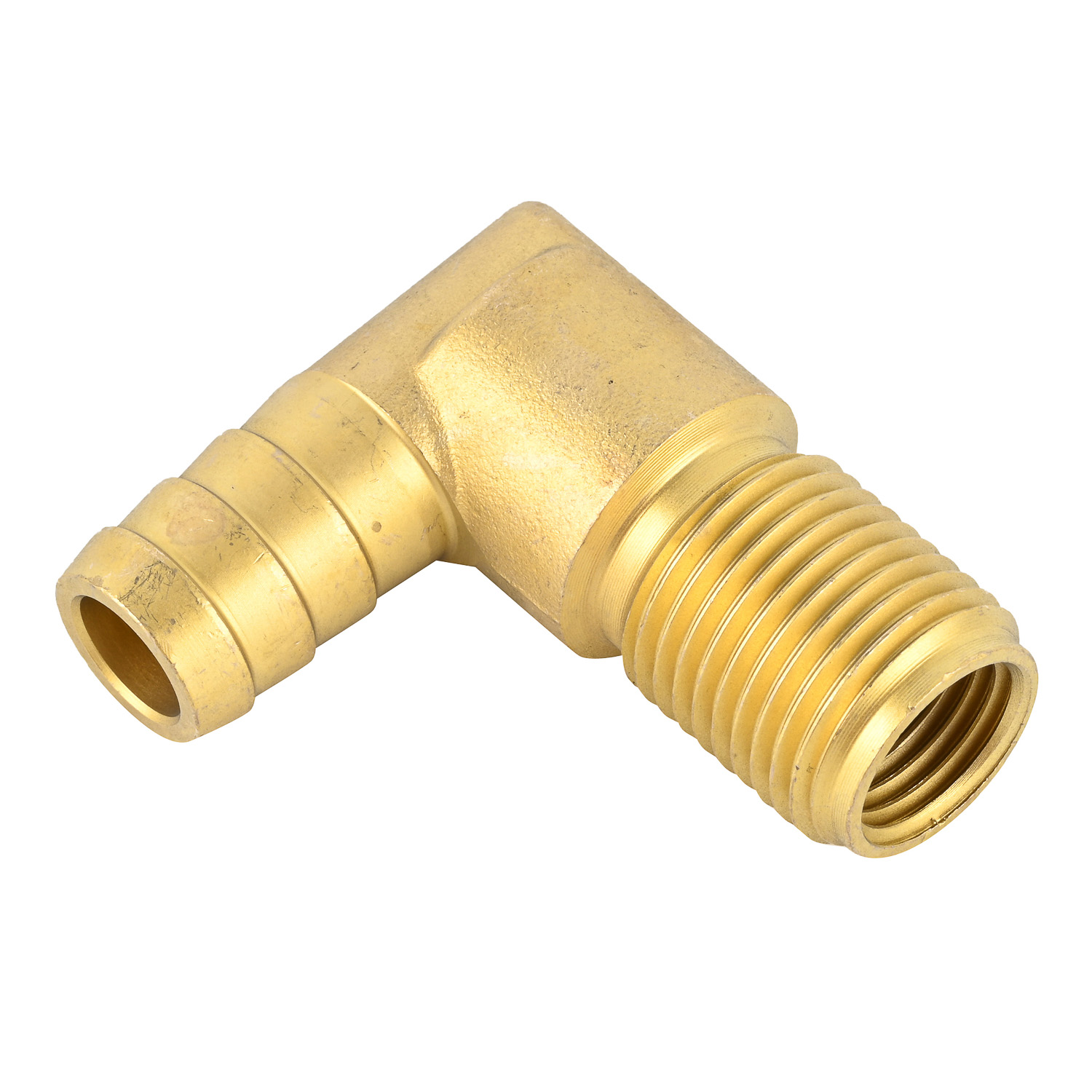
Industrial hydraulic and pneumatic systems require absolute sealing integrity. High-pressure environments demand leak-proof connections to maintain system efficiency and prevent fluid contamination. Thread accuracy dictates secure mating and pressure retention. NPT, BSPT, and metric thread standards must be machined perfectly to avoid cross-threading and galling during installation. Burst pressure ratings dictate the safety limits of the entire fluid system. Harsh environments require specific corrosion-resistant materials to prevent degradation. 316 stainless steel and Monel resist chemical attack, oxidation, and saltwater exposure. Specifying custom machined industrial fittings prevents hazardous leaks and pressure drops in critical infrastructure.
Evaluating Manufacturing Processes and Capabilities
Precision CNC Turning Components vs. Multi-Axis Milling
Determine the optimal machining process based on part geometry and volume. CNC turning excels at producing cylindrical parts like shafts, pins, and spacers. The workpiece rotates at high speeds while a stationary cutting tool shapes the material. Multi-axis milling handles complex, non-symmetrical geometries like valve bodies and custom brackets. The cutting tool rotates to remove material from a stationary workpiece. precision CNC turning components offer excellent rotational symmetry and surface finishes. Hybrid mill-turn machining centers combine both operations in a single setup. These advanced machines reduce setup times drastically. Tolerance stacking errors decrease because the part remains chucked in the spindle for the entire operation. Overall part accuracy improves significantly with hybrid mill-turn technology.
Machining Process
Optimal Part Geometry
Primary Industrial Application
Key Technical Advantage
CNC Turning (2-Axis)
Cylindrical, symmetrical
Shafts, pins, cylindrical fittings
High-speed production of rotational profiles with excellent surface finish
Multi-Axis Milling (3, 4, 5-Axis)
Complex, non-symmetrical
Housings, brackets, custom manifolds
Ability to create intricate 3D geometries and off-center features
Mill-Turn (Hybrid)
Complex cylindrical with milled features
Splined shafts, complex hydraulic spools
Eliminates tolerance stacking from multiple setups and manual handling
Swiss-Style Machining
Small diameter, long length
Micro-pins, medical device components
Prevents part deflection during heavy cutting operations
Hybrid Manufacturing and Complementary Production Methods
Integrating multiple manufacturing processes yields significant engineering advantages. Precision CNC machining pairs effectively with sheet metal fabrication. Deep drawing creates strong, lightweight base shapes for industrial enclosures. Welding joins complex sub-assemblies before final precision machining occurs to ensure mating surfaces remain perfectly flat. Near-net shape machining optimizes material usage and reduces cycle times. Casting or forging creates the complex base geometry first, minimizing raw material waste. Emerging metal 3D printing technologies also provide near-net shapes for exotic alloys like titanium or Inconel. Secondary CNC machining then achieves the final tight tolerances on critical surfaces, bearing journals, and threaded holes. This hybrid approach meets demanding structural specifications efficiently.
Scalability and Production Volume Trade-offs
Analyze tooling costs, setup times, and unit economics carefully. Prototyping and low-volume runs favor pure CNC machining due to zero dedicated tooling costs. High-volume production requires different manufacturing strategies to remain economical. Evaluate the transition from low-volume machining to high-volume stamping or forging. Specifying the right tooling and press capacities dictates this transition. Heavy stamping requires 250 to 1000-ton presses to form thick industrial metals accurately. Manufacturing agility defines a capable vendor. Evaluate a vendor's capacity to scale from initial validation runs to full-scale production. Quality and dimensional accuracy must not degrade as production volumes increase and tool wear accelerates.
Quality Control and Compliance Standards
Recognized certifications establish a baseline for quality management systems in industrial manufacturing. ISO 9001:2015 certification proves a vendor maintains documented, repeatable processes across their entire operation. AS9100 certification indicates capability for aerospace-grade industrial crossovers, requiring even stricter process controls. Full raw material lot traceability prevents the integration of counterfeit or substandard metals into your supply chain. Material Test Reports (MTRs) must accompany every batch of raw stock. These documents verify chemical composition and mechanical properties before machining begins.
Inspection frameworks guarantee batch-to-batch consistency across production runs. Coordinate Measuring Machines (CMM) verify complex geometries using precise touch probes, ensuring features align perfectly with the CAD model. Optical comparators and laser scanners inspect profiles that are difficult to touch, such as fine threads or micro-chamfers. First Article Inspection (FAI) reports validate the initial machine setup against the drawing before full production begins. Statistical Process Control (SPC) monitors ongoing production trends continuously. SPC identifies tool wear and thermal expansion issues before parts fall out of tolerance. Rigorous QA protocols ensure every component meets the exact engineering specifications.
Coordinate Measuring Machines (CMM): Validates complex 3D geometries, hole locations, and true position tolerances.
Optical Comparators: Projects magnified part silhouettes to verify thread pitches, angles, and small radii.
Surface Roughness Testers (Profilometers): Measures micro-inch surface finishes required for bearing journals and dynamic seals.
Hardness Testers (Rockwell/Brinell): Confirms the effectiveness of post-machining heat treatments.
Thread Ring and Plug Gauges: Provides rapid go/no-go verification for internal and external threaded features.
Implementation Risks and Mitigation Strategies
Technical specification misinterpretation causes severe project delays and financial losses. Misaligned tolerances result in entire batches of rejected parts. Misunderstood Geometric Dimensioning and Tolerancing (GD&T) leads to assembly failures on the factory floor. Slow quoting processes delay project kickoffs and disrupt manufacturing schedules. Mandate comprehensive DFM reviews before finalizing any purchase order. Evaluate vendors on their rapid technical interpretation capabilities during the quoting phase. Establish direct communication channels between OEM engineers and the manufacturer's technical team. Direct dialogue resolves GD&T ambiguities immediately and prevents costly manufacturing errors.
Supply chain disruptions impact production schedules heavily. Raw material shortages halt production lines without warning. Offshore shipping delays extend lead times and disrupt inventory planning. Port congestion and geopolitical factors add unpredictability to overseas sourcing. Assess vendor machine capacity accurately to ensure they can meet your volume demands. Evaluate the trade-offs of domestic versus offshore sourcing for your specific components. Require vendors to maintain strategic raw material inventory buffers. Safety stock agreements mitigate the risk of sudden material shortages. Dual-sourcing critical components provides an additional layer of supply chain security.
Conclusion
Submit 3D CAD models and 2D manufacturing drawings to prospective vendors to initiate a comprehensive DFM consultation.
Request detailed feedback to identify potential manufacturing bottlenecks or tolerance conflicts early in the design phase.
Compare lead time estimates, machine capacity, and raw material sourcing strategies across shortlisted manufacturers.
Review the vendor's First Article Inspection (FAI) procedures to verify their quality compliance framework.
FAQ
Q: What is the typical lead time for manufacturing custom precision metal parts?
A: Lead times vary based on part complexity, material availability, and production volume. Simple CNC turned parts take two to four weeks. Complex multi-axis milled components or parts requiring secondary heat treatments require six to eight weeks. Establishing blanket orders and raw material buffers with your vendor significantly reduces ongoing lead times.
Q: How do manufacturers ensure tight tolerances on custom precision machine shafts?
A: Manufacturers utilize rigid CNC turning centers and high-quality carbide tooling to maintain baseline accuracy. Thermal compensation software adjusts for machine expansion during operation. Secondary processes like centerless grinding achieve the final micro-inch tolerances. In-process gauging and final CMM inspections verify exact concentricity and diameter specifications.
Q: What materials are best suited for heavy-duty CNC machined flanged bushings?
A: Material selection depends on load, speed, and lubrication access. Traditional bearing bronzes offer excellent wear resistance for lubricated environments. Hardened steel alloys withstand extreme impact loads. Self-lubricating composites or oil-impregnated sintered metals work best for remote pivot points where manual maintenance is difficult.
Q: How is the quality and pressure rating of custom machined industrial fittings verified?
A: Quality is verified through strict dimensional inspection of thread profiles using calibrated ring and plug gauges. Optical comparators check thread pitch and angle. Pressure ratings are validated through hydrostatic burst testing on sample batches. Material certs ensure the alloy possesses the correct tensile strength for the rated pressure.
Q: What differentiates custom industrial dowel pins from standard catalog pins?
A: Custom pins are engineered for specific applications rather than generic use. They feature exact micro-inch diameter tolerances tailored for specific interference or slip fits. Custom pins utilize specialized alloy steels, specific heat treatments for targeted core hardness, and custom chamfer angles to accommodate unique automated assembly processes.
Q: How do production volumes impact the unit cost of precision CNC turning components?
A: Low-volume runs carry higher unit costs due to setup time and programming overhead distributed across fewer parts. As production volumes increase, unit costs drop significantly. High-volume runs allow manufacturers to optimize tool paths, purchase raw materials in bulk, and utilize automated bar feeders to maximize spindle uptime.