Engineering and procurement teams constantly weigh material costs against machining times and functional performance. Misjudging carbon steel grades often leads to premature part failure or unnecessary tooling expenses. The crucial decision between low-carbon 1018 and medium-carbon 1045 dictates much more than just the initial raw material spend. It significantly impacts downstream processing variables during CNC machining, heat treatment, and welding operations. Getting this choice wrong can ruin production schedules and inflate fabrication budgets. We provide a pragmatic, evidence-based framework for evaluating 1018 vs 1045 steel. You will learn how chemical composition directly influences machinability and mechanical limits. We explore the real-world trade-offs between tooling wear, fabrication bottlenecks, and operational durability. Ultimately, this guide ensures optimal material selection for your specific engineering outcomes.
Key Takeaways
1018 Steel: Best for high-volume, general-purpose CNC Turning Parts where extreme strength is not required, but high weldability and formability are critical.
1045 Steel: The industry standard for a Machine Shaft, gears, and high-wear components due to its medium carbon content, higher tensile strength, and responsiveness to induction hardening.
The Core Trade-off: 1018 minimizes tooling wear and fabrication bottlenecks (welding); 1045 provides superior mechanical properties but requires strictly controlled welding (pre/post-weld heat treatment) and optimal cutting speeds to prevent tool degradation.
AISI/SAE Chemical Composition & Material Standards
Understanding the chemical makeup forms the absolute foundation of proper material selection. The American Iron and Steel Institute (AISI) and Society of Automotive Engineers (SAE) rely on a standardized four-digit naming system. The first two digits dictate the core alloy category. The "10" prefix indicates plain carbon steel containing no major added alloying elements like chromium or molybdenum. The final two digits represent the nominal carbon content expressed in hundredths of a percent. Therefore, 1018 contains roughly 0.18% carbon. By contrast, 1045 holds around 0.45% carbon.
This seemingly small carbon gap completely changes how each metal behaves on the shop floor. Carbon acts as the primary hardening agent in steel. More carbon means higher strength but reduced ductility.
Both grades utilize manganese to boost overall performance. You typically find 0.60% to 0.90% manganese in these alloys. Manganese actively improves machinability. It also increases baseline tensile strength without forcing you to buy expensive proprietary alloys. You get a robust material at a highly accessible commodity price point.
Material states also play a massive role in baseline performance. You will typically evaluate these steels in either Hot Rolled (HR) or Cold Drawn (CD) forms. Hot rolled bar stock cools naturally in the open air. This cooling method leaves a scaly surface finish and looser dimensional tolerances. Cold drawn bar stock undergoes further processing at room temperature. The aggressive drawing process drastically improves dimensional stability. It also induces internal strain hardening. This strain hardening noticeably boosts the baseline yield strength of the raw bar. You must account for these starting states during your initial engineering evaluation.
Mechanical Properties & Heat Treatment Viability
The mechanical performance gap between these two alloys directly dictates their end-use applications. We must compare standard yield strength, tensile strength, and hardness baselines to make informed manufacturing decisions.
Here is a simplified baseline comparison chart detailing typical properties for cold-drawn material:
Mechanical Property (Cold Drawn) | 1018 Steel | 1045 Steel |
Tensile Strength | ~ 64,000 psi (440 MPa) | ~ 91,000 psi (625 MPa) |
Yield Strength | ~ 54,000 psi (370 MPa) | ~ 77,000 psi (530 MPa) |
Brinell Hardness (HB) | 126 | 179 |
1045 clearly dominates in raw mechanical strength. Its higher carbon matrix directly translates to superior load-bearing capabilities. However, these baselines only tell part of the engineering story. Heat treatment realities often drive the final material choice.
1018 faces strict limitations regarding thermal hardening. You cannot effectively through-harden this material. The 0.18% carbon content simply remains too low to form martensite entirely throughout the part. You are strictly limited to case hardening techniques like carburizing. Carburizing infuses extra carbon into the outer skin of the metal in a specialized furnace. This creates a hard, highly wear-resistant surface while maintaining a tough, shock-absorbing core.
1045 boasts excellent heat treatment capabilities. It responds beautifully to direct thermal processes. You can easily apply localized flame or induction hardening. The 0.45% carbon content allows the material to reach significant wear resistance levels without carburizing. Proper induction hardening routinely achieves HRC 50-55 on the Rockwell scale. This hardness rating makes it highly suitable for heavy-duty friction environments.
Machinability scores heavily influence production schedules and tooling budgets. The manufacturing industry uses AISI 1212 steel as the baseline 100% machinability standard. Comparing 1018 vs 1045 steel reveals distinct operational differences.
1018 demonstrates highly favorable CNC machining feedback. It scores an impressive 78% machinability rating. Machine operators appreciate turning it at high spindle speeds. However, this low-carbon alloy can feel quite "gummy" during heavy cuts. It occasionally leaves a torn surface finish if parameters drift. You must optimize cutting speeds carefully. Utilizing aggressive chip breakers also prevents long, stringy chips from wrapping dangerously around the tooling or workpiece.
1045 exhibits very different cutting behaviors on the lathe. It holds a lower baseline machinability rating around 57%. This lower score means increased tool wear. You will definitely consume carbide cutting inserts faster. Cycle times may increase slightly to protect spindle motor loads. Surprisingly, it often produces a crisper, vastly superior surface finish. The higher carbon matrix cleanly resists tearing under the sharp cutting edge.
Weldability introduces another critical layer of fabrication risk. Engineers use the Carbon Equivalent (CE) formula for accurate risk assessment. A standard CE formula looks like this: CE = %C + %Mn/6 + (%Cr+%Mo+%V)/5 + (%Ni+%Cu)/15. Higher CE numbers indicate exponentially higher cracking risks during thermal expansion and contraction.
1018 remains highly weldable. You can confidently use standard shop practices. MIG, TIG, and Stick welding all perform flawlessly. You face minimal risk of thermal cracking under normal conditions.
1045 has a dangerously high CE score. You cannot simply weld it and walk away. It mandates strict thermal controls. Follow these mandatory steps to prevent hydrogen-induced cold cracking:
Thorough Pre-heating: Warm the entire joint area evenly to at least 400°F (200°C) before striking an arc.
Low-Hydrogen Consumables: Strictly use low-hydrogen electrodes (such as E7018) to minimize atmospheric moisture ingress.
Post-Weld Heat Treatment (PWHT): Slowly cool the welded assembly in a controlled oven environment to relieve internal stresses.
Skipping these steps practically guarantees heat-affected zone (HAZ) embrittlement. The weld will likely snap under dynamic load.
Cost Analysis: Raw Material vs. Total Processing Cost
Procurement teams often focus entirely on commodity pricing. They quickly notice the per-pound cost difference between raw 1018 and 1045 remains incredibly marginal. Sometimes the gap measures mere pennies per pound. However, hidden costs lurk downstream. Do not let raw invoice totals dictate your engineering strategy.
You must analyze the total processing cost. True manufacturing expenses go far beyond the initial purchase order. Processing overheads can quickly erase any perceived raw material savings. Calculate the direct business impact of reduced cutting speeds. Because 1045 machines slower, it drives higher insert replacement rates. These factors compound rapidly during long CNC production runs. Machine spindle time costs serious money. If a specific part takes 20% longer to turn, your overall production budget must absorb that hit.
Secondary operational costs also require careful consideration. Does your part actually need enhanced wear resistance? You must factor in the added labor and energy expenses for heat-treating 1045. Conversely, case-hardening 1018 demands expensive, specialized furnace time. Carburizing cycles take many hours to complete. You must weigh the expense of slower machining against the heavy expense of thermal processing. Pick the path offering the lowest overall fabrication burden while meeting safety factors.
Shortlisting Logic: Specifying Based on End-Use Application
Clear engineering logic simplifies the material selection process. You must specify alloys based on exact operational outcomes rather than habit. Both materials excel when placed in their ideal mechanical environments.
When to Specify 1018:
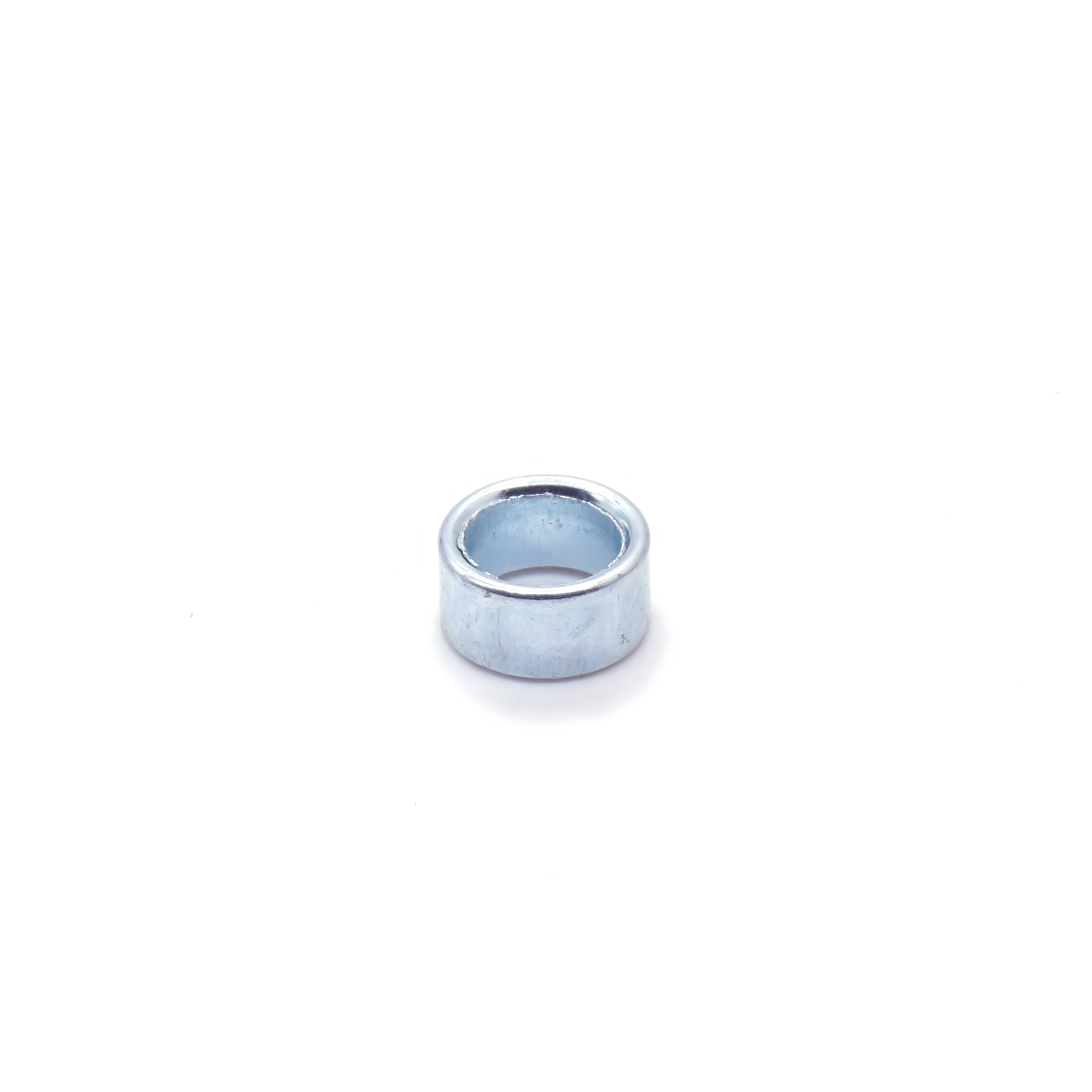
High-volume CNC Turning Parts such as mounting pins, threaded spacers, and non-structural brackets.
Complex structural components requiring extensive multi-pass welding without the budget for post-process heat treatment.
Sheet metal assemblies or thin-walled tubes utilizing aggressive bending, crimping, or cold forming.
Parts needing a tough, ductile core paired with a wear-resistant carburized outer shell.
When to Specify 1045:
Any heavily loaded Machine Shaft, drive axle, or internal spline subjected to moderate-to-high torsional stress.
Drive gears, heavy-duty wear plates, and linear guide rails requiring localized induction hardening.
Rigid structural components where baseline yield strength simply cannot be compromised for faster machining speeds.
Components operating in high-friction environments requiring HRC 50+ surface hardness without lengthy carburizing cycles.
Conclusion
The choice between 1018 vs 1045 steel rests on a classic engineering tension. You must balance manufacturing velocity against operational durability. 1018 keeps production lines moving fast. It cuts easily, welds flawlessly, and handles cold forming well. 1045 demands more processing patience but rewards you with superior strength, higher rigidity, and exceptional wear resistance.
Your actionable next step involves deeply reviewing your engineering drawings. We highly recommend engineers cross-reference their expected physical load requirements against all necessary welding operations. Complete this assessment before sending out any Request for Quotes (RFQs). Understanding these variables upfront prevents costly revisions.
Stop guessing on material specifications. Consult with manufacturing experts today. Submit your CAD files for a comprehensive review. Evaluating specific CNC machining viability ensures your project succeeds from start to finish while maintaining strict budgetary control.
FAQ
Q: Is 1045 stronger than 1018 steel?
A: Yes, 1045 has significantly higher tensile and yield strength due to its higher carbon content, making it suitable for higher-stress applications.
Q: Can you weld 1045 steel to 1018 steel?
A: Yes, but the process must cater to the 1045. It requires low-hydrogen electrodes, pre-heating, and potentially post-weld stress relief to avoid brittle failure in the HAZ.
Q: How does 1018 compare to 12L14 for CNC machining?
A: While 1018 is easy to machine, 12L14 (a free-machining steel with added lead and sulfur) machines significantly faster with less tool wear, though 12L14 sacrifices weldability and environmental compliance (due to lead).
Q: Does 1045 rust easily?
A: Yes. Both 1018 and 1045 are plain carbon steels with no inherent corrosion resistance (unlike stainless steel). Both require surface treatments (plating, black oxide, paint, or oil) to prevent oxidation.


