Specifying 316 stainless steel solves only half the equation for true corrosion resistance. Improper machining can quickly compromise the material’s structural integrity and surface defenses. Engineers, procurement managers, and product designers face major hurdles when transitioning from prototype to full production. You cannot treat this alloy like standard carbon steel or aluminum. Poor manufacturing methods introduce thermal damage, rapid work hardening, and dangerous surface micro-crevices. These hidden defects lead to catastrophic failures in harsh environments.
This article outlines the technical realities of shaping this demanding material. We will help you mitigate costly production risks effectively. You will learn clear, actionable criteria for evaluating a capable CNC manufacturing partner. Mastering these elements ensures your components survive extreme conditions safely and reliably.
Key Takeaways
316 stainless steel’s high molybdenum content provides superior corrosion resistance but drastically increases work hardening risks and tool wear during machining.
Successful production requires rigid machine setups, optimized tool paths, and high-pressure coolant strategies to prevent insert breakage and thermal damage.
Post-machining processes, specifically passivation (e.g., ASTM A967), are non-negotiable for restoring the passive oxide layer critical to medical and marine applications.
Evaluating a CNC partner requires looking past generic capabilities and interrogating their specific methodologies for managing 316 SS cycle times and quality control.
The Engineering Reality: Why 316 SS Demands Specialized Machining
Many designers choose 316 over 304 stainless steel. Chemistry drives this primary decision. Standard 304 lacks molybdenum entirely. The 316 alloy adds roughly two to three percent molybdenum. It also increases the overall nickel content. This specific chemical recipe creates excellent resistance to harsh chlorides. However, these same elements make the material incredibly stubborn during production. Successful 316 stainless steel CNC machining requires highly specialized operational approaches.
We must address the severe work hardening problem first. When a cutting tool engages 316, it generates immense friction. This localized heat creates a hardened surface layer instantly. Engineers call this phenomenon strain hardening. If the tool rubs instead of cutting cleanly, the material toughens further. Subsequent tool passes then crash into this hardened zone. The tool bounces, chatters violently, or fails completely. This unpredictability ruins tight production schedules.
Thermal conductivity presents another massive hurdle. Aluminum dissipates heat rapidly through the flying chip. Stainless alloys do not behave this way. The 316 grade has terrible thermal conductivity properties. It traps heat directly at the vulnerable cutting edge. This trapped thermal energy destroys tool coatings rapidly. Operators must actively manage this intense heat to survive a long production run. Failure to extract heat guarantees warped parts and burned cutting tools.
Process Optimization for 316 Stainless Steel Machining
Operators cannot rely on generic cutting parameters here. Process optimization dictates complete success or costly failure. We must control tool paths and heat generation carefully. Every movement of the spindle matters deeply.
Best Practices for CNC Milling
Milling this alloy requires aggressive but highly controlled techniques. You must utilize climb milling exclusively. Conventional milling causes the cutter teeth to rub before digging into the metal. Rubbing creates immediate, severe work hardening. Climb milling ensures the cutting edge enters at maximum chip thickness. The tool slices cleanly below the hardened surface layer safely. It ejects the chip before heat transfers into the primary workpiece.
Tool selection also matters deeply for milling operations. We strongly recommend variable helix end mills. Standard end mills create rhythmic harmonic vibrations. These vibrations cause destructive chatter on the workpiece. Variable helix tools break up these damaging harmonics. They stabilize the cutting process significantly. This specialized geometry extends tool life and protects delicate surface finishes. It allows machinists to run slightly faster feed rates securely.
Strategies for CNC Turning Stainless Steel Parts
Insert breakage plagues many machine shops globally. You need clear troubleshooting strategies for CNC turning stainless steel parts. Troubleshooting usually reveals fundamental feed rate issues. Operators often slow down feed rates out of extreme caution. This represents a critical machining mistake. Slow feeds cause the insert to dwell and rub harmlessly against the part. The material work-hardens instantly under the pressure. You must maintain consistent, aggressive feed rates. The tool must stay fully engaged in the cut constantly.
Tool geometry plays a vital role in turning operations. Inserts require exceptionally sharp, positive rake angles. A positive rake heavily reduces overall cutting forces. It shears the metal cleanly instead of pushing it brutally. You also need highly specialized carbide coatings. Titanium Aluminum Nitride (TiAlN) excels under these brutal conditions. TiAlN creates a protective aluminum oxide layer when heated aggressively. It shields the fragile carbide substrate from extreme thermal loads.
Compliance, Surface Finish, and Post-Processing
High-stakes industries leave absolutely zero room for error. Medical devices and maritime components face brutal operational environments. A single microscopic surface defect can cause catastrophic system failure. Chemical processing plants demand absolute material integrity to prevent toxic leaks. You must treat post-processing as a critical manufacturing step.
Surface roughness dictates component survival directly. Engineers specify highly precise Ra (Roughness Average) values for stainless steel CNC parts. A mirror-smooth finish actively prevents micro-crevices. Chlorides and harmful bacteria love to accumulate inside deep scratches. These microscopic pits quickly initiate localized pitting corrosion. Clean, polished surfaces deny these damaging agents a physical foothold. Good surface finishes keep marine equipment rust-free for years.
Machining inherently damages the material's natural defensive properties. The heavy cutting process strips away the protective chromium oxide layer. It also embeds microscopic free iron particles directly into the machined surface. You must remove this free iron completely. Passivation remains an absolute, non-negotiable requirement.
Chemical passivation restores peak corrosion resistance safely. The process submerges the completed parts in heated nitric or citric acid baths. We strictly follow demanding industry standards like ASTM A967. The acid solution dissolves embedded iron contaminants rapidly. It then promotes the immediate regrowth of a dense, passive oxide layer. Without this chemical step, your machined parts will rust surprisingly quickly in the field.
Cost Drivers and DFM for 316 Stainless Steel Fittings and Parts
Engineers must understand the financial realities dictating this material. Machining cycle times are inherently longer than standard metals. You cannot push cutting speeds (SFM) like you routinely do for aluminum. High speeds melt carbide tools instantly. Total machine time increases heavily, driving up the baseline part cost.
Tool wear economics also play a massive role here. Frequent tool changes add up quickly during mass production. Machinists might push spindle speeds aggressively to save time. This decision often results in catastrophic tool failure. A shattered tool ruins an expensive raw workpiece. Scrapped parts destroy profit margins rapidly. Reliable production requires conservative spindle speeds and predictable, scheduled tool replacements.
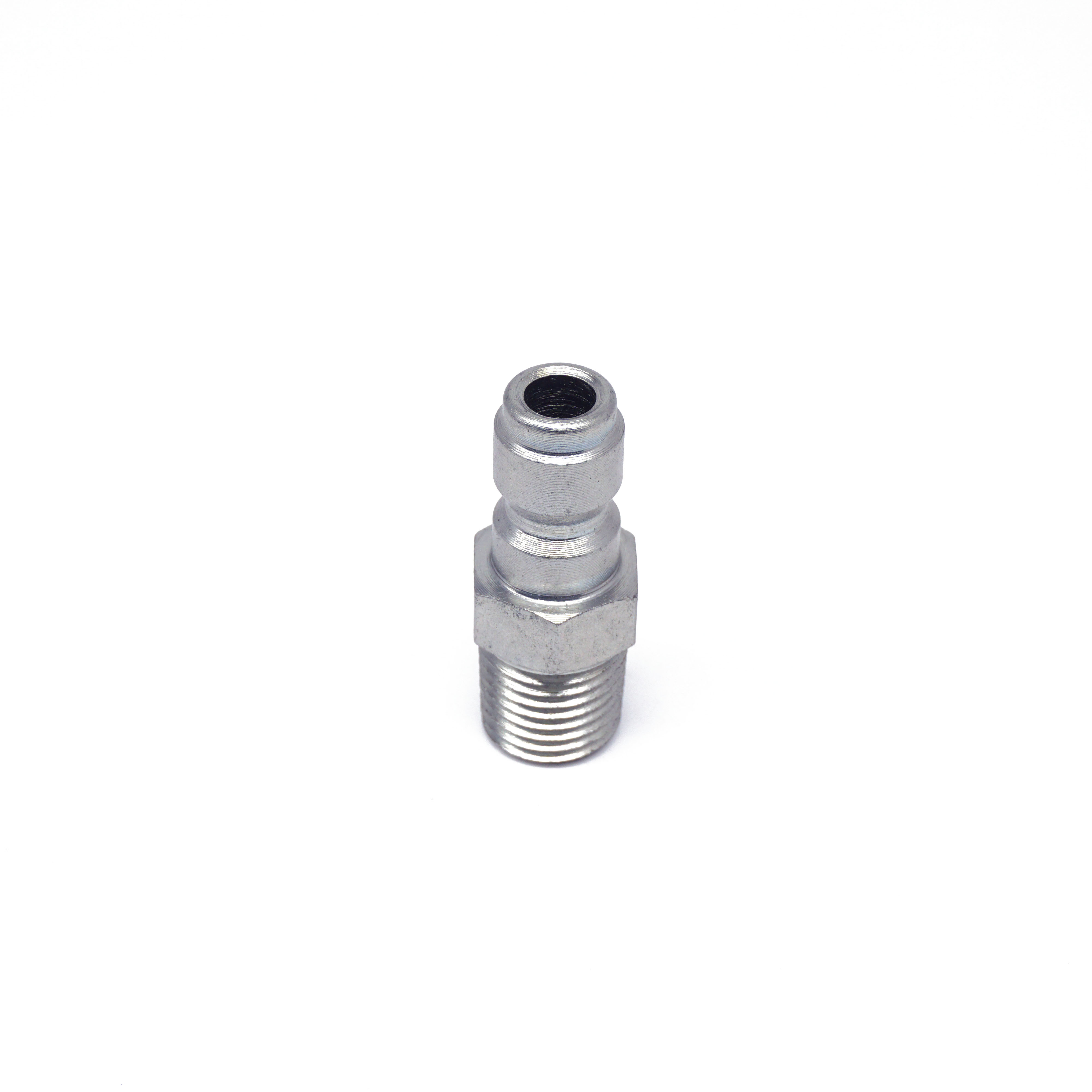
Design for Manufacturability (DFM) saves serious money upfront. Smart engineering choices reduce machining friction and tool wear dramatically. This proves especially true for complex 316 stainless steel fittings.
Table: 316 Stainless Steel DFM Optimization Guide
Feature Type
Avoid This Design
Specify This Instead
Manufacturing Impact
Cavities
Deep, square internal pockets
Shallow pockets, generous internal radii
Reduces end mill breakage and corner chatter.
Threads
Deep blind tapped holes
Through-holes or shallow thread depths
Prevents tap snapping and reduces costly scrap.
Walls
Extremely thin wall structures
Thicker nominal wall dimensions
Minimizes harmonic vibration and structural warping.
Follow these actionable DFM tips to lower your quotes immediately:
Avoid deep cavities trapping chips and severe heat.
Specify standard internal radii allowing larger, stronger end mills.
Standardize thread depths heavily to minimize brittle tap breakage.
Loosen tolerances on non-critical features to reduce metrology inspection time.
Design chamfers instead of complex radius profiles where possible.
Shortlisting Logic: How to Vet a CNC Partner for 316 SS
Finding the right manufacturing partner remains quite difficult. You must look far beyond basic equipment lists and vague promises. Lightweight commodity CNC machines fail quickly under these conditions. They lack the physical mass required to absorb heavy cutting forces. High-volume 316 stainless steel machining requires serious, heavy-duty equipment. Look for massive cast iron machine frames. The vendor needs highly rigid trunnions and robust spindles. Rigidity prevents vibration, protecting both the expensive tool and the final part.
Coolant infrastructure proves equally important for continuous production. Standard flood coolant often fails to reach the deep cutting edge. The trapped localized heat boils the coolant away instantly. Your vendor must demonstrate high-pressure, through-tool coolant capabilities. This technology blasts metal chips out of deep holes forcefully. It actively manages the severe thermal load exactly at the cutting zone.
Stringent quality assurance separates amateurs from dedicated professionals. Medical and aerospace buyers require absolute material traceability always. Demand verifiable material test reports (MTRs) for all raw stock. The machine shop must provide thorough first-article inspection (FAI) reports upon request. They should utilize advanced Coordinate Measuring Machines (CMM) regularly. CMM reporting guarantees tight geometric tolerances remain consistent, even as cutting tools wear down naturally over time.
Conclusion
Successful part production relies on a delicate technical balance always. You must combine optimal feed rates, rigid tooling, and rigorous post-processing perfectly. Missing even one variable invites corrosion and mechanical failure.
Here are the critical next steps for your current project:
Verify your chosen machine shop uses heavy-duty, rigid equipment.
Confirm their chemical passivation processes meet strict ASTM standards.
Avoid choosing manufacturing partners based solely on the lowest initial quote. Cheap quotes often ignore tool wear realities completely. This mistake leads to delayed deliveries and out-of-tolerance components.
Implement intelligent DFM principles early to control manufacturing cycle times.
Submit your 316 SS CAD files today. Our engineering team will provide a comprehensive technical review quickly. We offer detailed DFM feedback and a transparent production quote to ensure your complex project succeeds flawlessly.
FAQ
Q: What is the difference between machining 316 and 316L stainless steel?
A: The primary difference involves carbon content. The "L" stands for low carbon. 316L contains a maximum of 0.03% carbon. Standard 316 contains up to 0.08%. This lower carbon content gives 316L slightly better machinability. It also provides superior weldability overall. It prevents harmful carbide precipitation during welding, maintaining high corrosion resistance precisely at the weld seams.
Q: Why do my carbide inserts keep breaking when CNC turning 316 stainless steel?
A: Insert breakage usually stems from three main operational issues. Interrupted cuts create brutal shock loads on brittle carbide edges. Improper feed rates are another major culprit. If feeds are too slow, the tool rubs and instantly work-hardens the surface. Finally, inconsistent coolant application causes severe thermal shock. The insert heats up, gets splashed with cold fluid, and shatters.
Q: Does 316 stainless steel require passivation after CNC machining?
A: Yes, passivation remains strictly required. The heavy machining process strips away the natural protective chromium oxide layer. It also smears microscopic free iron from the cutting tools onto the part's delicate surface. Passivation uses heated chemical acid baths to dissolve this free iron completely. It forces the rapid regrowth of a uniform, passive oxide layer to guarantee full corrosion resistance.