Motion control and power transmission systems face a constant physical dilemma in modern engineering. Mechanical components must survive aggressive, abrasive friction on their exterior surfaces during continuous operation. Simultaneously, they must absorb massive torsional shock in their core. Brittle materials snap easily under sudden impact loads. Soft materials wear down quickly under constant surface friction. You need a highly specialized material to bridge this gap effectively. Engineers routinely turn to 8620 alloy steel to solve this exact mechanical problem.
It is a highly versatile, low-carbon, nickel-chromium-molybdenum alloy. Industry leaders recognize it as the absolute benchmark for case-hardened applications across heavy machinery and robotics. We wrote this comprehensive guide to provide a transparent, data-driven evaluation framework. You will learn how to specify 8620 steel in custom manufacturing operations effectively. We carefully balance mechanical capabilities against actual processing realities and common alternative materials. Read on to discover if this specific alloy fits your next dynamic load application.
Key Takeaways
Dual-Property Advantage: 8620 steel achieves a high surface hardness (up to 60+ HRC) post-carburizing while retaining a tough, ductile core (preventing brittle failure).
Optimal Use Cases: The industry baseline for an 8620 steel precision shaft, heavy-duty gears, and load-bearing pins.
Machining Economics: Offers excellent machinability in its annealed state, with predictable cost factors compared to other alloy steels.
Strict Limitations: It is not highly corrosion-resistant and requires specific, controlled heat treatment processes to realize its mechanical benefits.
The Engineering Case for an 8620 Steel Precision Shaft
When engineers design an 8620 steel precision shaft, they rely heavily on the "case-hardened core" framework. Carburization fundamentally alters the steel surface during manufacturing. The process introduces excess carbon into the outer layer inside a heated, carbon-rich atmosphere. This creates a highly hardened, wear-resistant exterior shell. The outer shell easily resists severe abrasion from surrounding bearings, seals, and bushings. Meanwhile, the inner core remains virtually unchanged metallurgically. It stays flexible and highly ductile. It easily absorbs sudden torque spikes without fracturing. This dual-property nature causes the risk of brittle failure to drop significantly.
Industrial gearboxes produce extreme lateral and axial loads continuously. A Machine Shaft operating in these harsh environments needs strong transverse toughness. The specific nickel content in 8620 steel provides this exact mechanical trait. It actively prevents sudden shearing when operational loads shift unexpectedly during equipment start-ups or emergency stops. Heavy machinery heavily relies on this predictable toughness for fundamental operator safety and equipment longevity.
Similarly, a Motor Shaft demands exceptionally high fatigue resistance. High-speed continuous rotation generates sustained operational heat over thousands of hours. Rotational stability is paramount for overall motor efficiency. The molybdenum content in the alloy prevents the steel from softening prematurely under these conditions. It maintains the underlying structural integrity even under continuous thermal stress. You can rely on this predictable material behavior for long-term field performance.
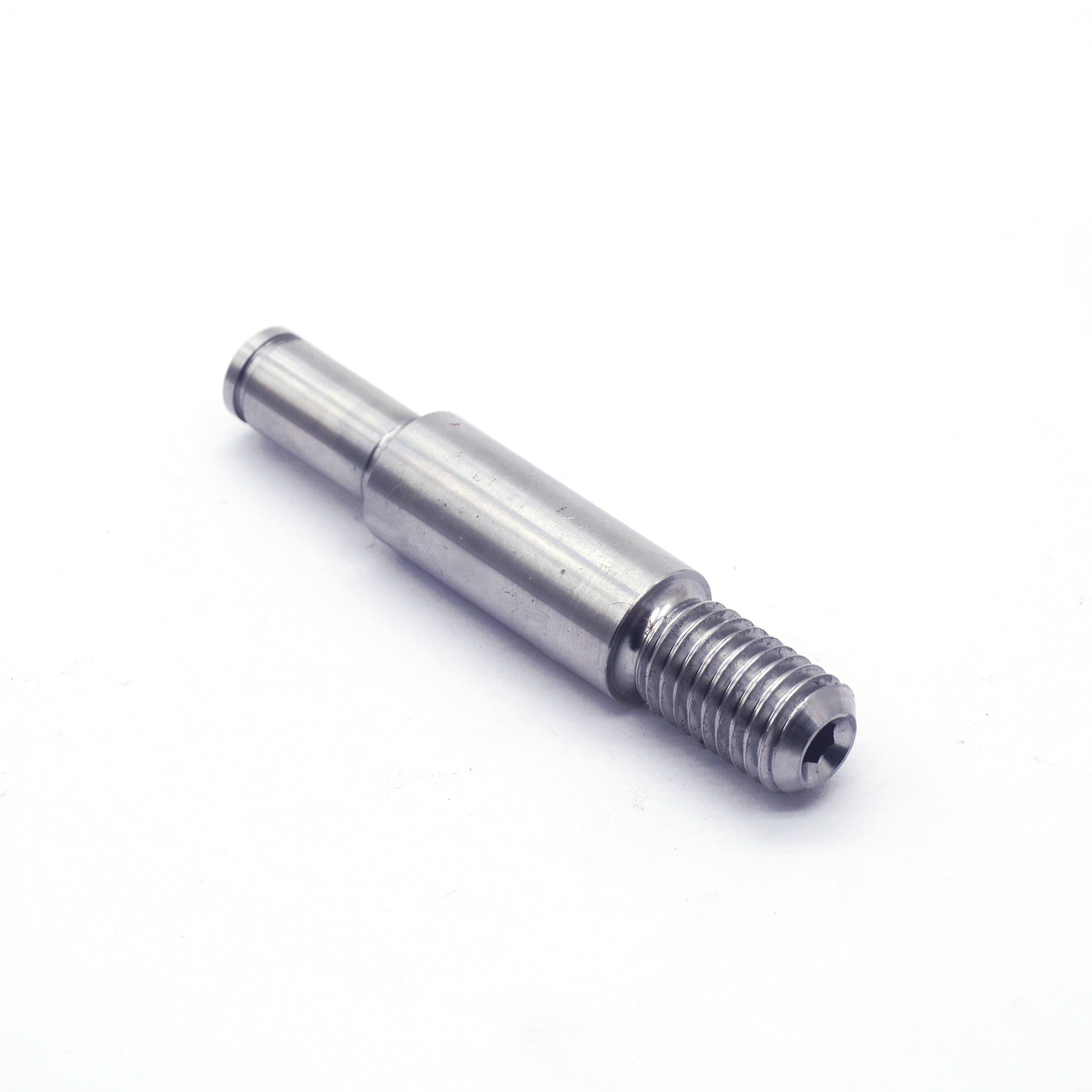
Understanding the AISI/SAE "86" series requires looking closely at its specific chemistry. Each alloying element plays a distinct, crucial role in the final mechanical behavior. The standard 8620 designation tells a specific metallurgical story about how the material will perform under stress.
Nickel (0.40–0.70%): Drives internal core toughness. It heavily boosts overall impact resistance. This prevents microscopic crack propagation during heavy shock loads.
Chromium (0.40–0.60%): Increases overall hardenability. It provides excellent surface wear resistance. It allows the carburized case to form evenly across complex geometries.
Molybdenum (0.15–0.25%): Ensures structural integrity at elevated operating temperatures. It actively resists high-stress fatigue. It keeps the flexible core stable during continuous operation.
Carbon (0.18–0.23%): This strictly low carbon content is highly deliberate. It specifically allows for case hardening instead of through-hardening. It prevents the core from turning brittle during the rapid quenching phase.
We can observe its true mechanical baselines in the validated data below. These crucial performance metrics guide critical engineering decisions daily. You must always evaluate these specific numbers against your unique application load requirements.
| | Typical Mechanical Properties of 8620 Alloy Steel |
Mechanical Property | Metric / Value Range | Material Condition |
Tensile Strength | 620–830 MPa | Varies heavily by specific heat treatment |
Yield Strength | 345–415 MPa | Annealed or Normalized state |
Core Hardness | 150-180 HB | Annealed or Normalized state |
Surface Hardness | 55-60+ HRC | Post-Carburized (Case Hardened) Surface |
Material Selection: 8620 vs. Common Alternatives
Engineers constantly weigh different alloys for custom part production. Comparing 8620 against common market alternatives clarifies the precise selection logic. We present a structured breakdown below to simplify your material sourcing decisions.
8620 vs. 4140 Steel
4140 is a widely popular medium-carbon steel. Manufacturers design it primarily for uniform through-hardening applications. You should specify 8620 when surface wear is extremely high but core impact absorption matters most. Specify 4140 for uniform, high-strength static components. 4140 provides consistent strength throughout the entire cross-section of the part. However, the lower carbon level in 8620 offers vastly superior weldability prior to any heat treatment.
8620 vs. 4340 Steel
4340 dominates extreme, high-stress aerospace environments. It offers truly incredible tensile strength. However, it is notoriously difficult and expensive to machine. Tooling costs soar during bulk production. CNC cycle times increase dramatically. 8620 provides a much more cost-effective choice. It works perfectly for heavy industrial, agricultural, and automotive parts. These commercial sectors rarely face extreme aerospace-level loads. You save substantial manufacturing money without sacrificing necessary performance.
8620 vs. Low-Carbon Structural (e.g., A36)
A36 is cheap, readily available, and strictly structural in nature. You cannot reliably case-harden it for heavy surface wear. 8620 justifies its premium pricing easily in motion control applications. It delivers vastly superior fatigue resistance. It handles dynamic load capabilities highly effectively. Choose 8620 over A36 for any rapidly moving mechanical part. A36 strictly belongs in static structural frames, not spinning inside a gearbox.
| | | Alloy Selection Comparison Summary |
Alloy Grade | Carbon Content | Primary Engineering Application | Key Mechanical Advantage |
8620 | Low (~0.20%) | Dynamic shafts, transmission gears | Hard outer case, tough flexible core |
4140 | Medium (~0.40%) | Static high-strength components | Uniform through-hardening strength |
4340 | Medium (~0.40%) | Critical aerospace components | Extreme stress and fatigue resistance |
A36 | Low (~0.26%) | Static structural framing | Low cost, extremely easy welding |
Manufacturing Realities: Machining, Grinding, and Costs
Production scaling requires evaluating true machining economics objectively. Let us examine the actual operational costs and processing factors you will face on the shop floor.
We typically use 12L14 steel as an industry baseline for machinability ratings. Against this baseline, 8620 carries a machining cost factor of approximately 2.9. Its raw material cost factor sits roughly around 2.5. Machining remains highly efficient when the steel is in its soft, annealed state. CNC operators typically recommend turning feed rates around 100-150 ft/min. Using proper carbide tooling and adequate flood coolant ensures excellent surface finishes and predictable tool life.
Post-heat-treat operations are an absolute necessity for precision parts. Heat treatment inevitably induces slight dimensional distortion. The metal microstructure shifts and warps slightly as it cools rapidly. Therefore, precision components almost always require final centerless grinding. This crucial abrasive grinding step removes the microscopic warping. It restores the tight dimensional tolerances required for assembly. It guarantees a perfect, vibration-free fit for roller bearings and oil seals.
You must also carefully consider weldability assumptions during your design phase. Because of its strictly low carbon content, 8620 possesses excellent welding characteristics. Fabricators appreciate its stable, predictable weld pool. However, you must perform all required welding prior to carburization. Welding a hardened, carburized part causes catastrophic micro-cracking and immediate failures.
Evaluation Constraints, Risks, and Limitations
Every engineered material carries distinct physical trade-offs. We must be entirely transparent about the practical risks of specifying 8620 steel in your assemblies.
Corrosion Susceptibility: 8620 rusts quite easily in damp or unprotected environments. It contains insufficient chromium to act as a stainless steel. Real-world implementation requires robust secondary protective coatings. You will likely need zinc plating, black oxide treatments, or continuous oil retention strategies. Do not leave bare 8620 exposed to weather elements.
Heat Treatment Complexity: Carburizing is a highly specialized, time-intensive process. It requires strict, computerized atmospheric control inside the furnace. Improper atmosphere control leads to uneven case depths. Worse, it can cause severe core brittleness if carbon migrates too deeply. You must partner exclusively with certified, experienced heat-treat facilities.
Temperature Limitations: We firmly do not recommend this specific alloy for cryogenic applications. Extreme high-heat environments also pose significant operational risks. The carburized exterior case may eventually lose its temper. It will soften and fail rapidly under intense friction if ambient operating temperatures exceed its standard tempering threshold.
Conclusion
We can summarize the material shortlisting logic quite simply. Specify 8620 when designing a Machine Shaft or industrial gear requiring a 60 HRC wear surface. Use it explicitly when the component will fail catastrophically if the inner core becomes brittle. It perfectly balances extreme surface hardness and internal shock-absorbing toughness.
Engineers should take several specific next steps for successful part procurement:
Verify equivalent international grades with your raw material suppliers to prevent unexpected sourcing delays.
Discuss heat-treat tolerances and required case depths early in the initial design phase.
Submit your finalized CAD prints for a comprehensive manufacturability review.
Plan for post-treatment centerless grinding to ensure bearing journals meet strict required specifications.
FAQ
Q: Is 8620 a high-carbon steel?
A: No. It is explicitly a low-carbon alloy steel (approx. 0.20% carbon). This is often misunderstood. Its high surface hardness comes entirely from the secondary carburizing process, not its base composition.
Q: What are the equivalent international grades for 8620?
A: British EN20 / 817M20, European 1.6523, and Japanese SNCM220. (Include ASTM 8620H for high-hardenability variants).
Q: Can you weld 8620 steel after it has been case-hardened?
A: It is highly discouraged. Welding after heat treatment destroys the hardened case, alters the core temper, and drastically increases the risk of cracking. Welding must occur in the annealed state.


