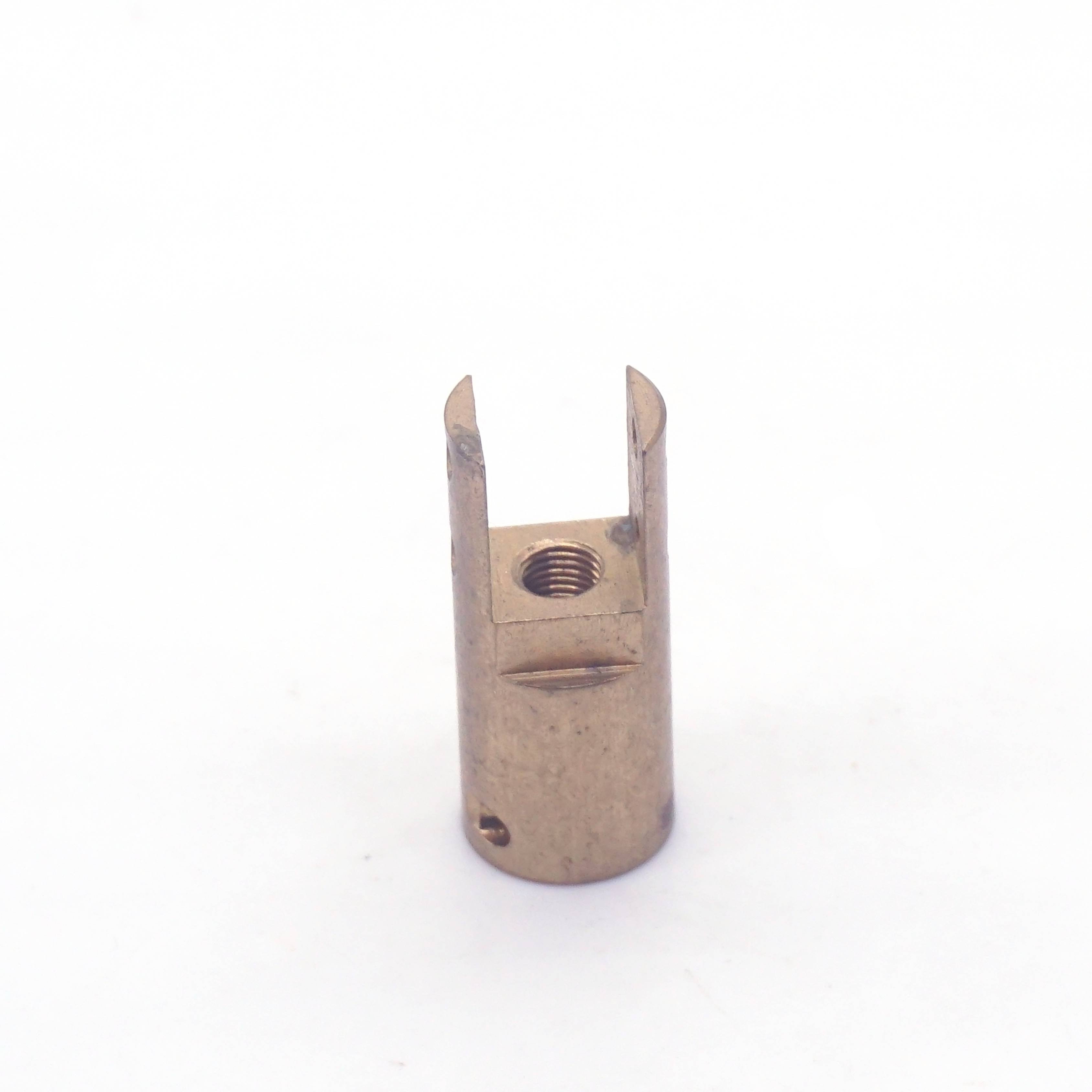
Fastener failure in dynamic industrial machinery carries a heavy operational cost. Static components forced to handle rotational stress inevitably degrade, causing a cascade of mechanical issues across the assembly. Traditional threaded bolts and rivets frequently fail under high shear loads because their design inherently concentrates stress at the thread roots. Furthermore, they restrict necessary axial rotation in mechanical linkages. This restriction leads to accelerated wear, linkage binding, and catastrophic equipment downtime. Specifying the correct clevis pin mitigates these mechanical failures. Ranging from standardized SAE formats to custom machined profiles, these unthreaded cylindrical fasteners ensure precise pivot articulation. They distribute shear loads evenly across a solid cross-section and significantly reduce long-term maintenance overhead in heavy-duty applications. Replacing static bolts with dedicated pivot hardware keeps dynamic machinery running smoothly.
Clevis pins provide superior shear strength and allow controlled axial rotation, making them critical replacements for static fasteners in dynamic assemblies.
Material selection and pin architecture (e.g., grooved, adjustable, or standard drilled) directly dictate load capacity, assembly speed, and lifecycle in high-vibration industrial environments.
Partnering with a specialized clevis pin supplier is essential when specifying custom industrial clevis pins to meet non-standard tolerances, CAD integration requirements, or specialized environmental compliance.
Total cost of ownership is optimized by balancing the upfront costs of precision pivot pins against the reduction in maintenance intervals, rapid assembly capabilities, and equipment failure rates.
The Role of the Clevis Pin in Industrial Machinery
Overcoming Shear Stress in Dynamic Linkages
Mechanical assemblies subjected to cyclical loading require fasteners capable of withstanding intense transverse forces. Threaded bolts possess V-shaped thread roots that act as stress risers. When you subject a bolt to heavy shear loads, these thread roots concentrate the force. This concentration initiates micro-cracks that eventually lead to fatigue failure. An unthreaded cylindrical pin eliminates this vulnerability entirely. By presenting a solid, uniform cross-section to the shear plane, the pin distributes the applied load evenly across its entire diameter. You get maximum material strength exactly where the joint needs it most.
Bolts are designed to clamp components together. They utilize tension to create friction between mating surfaces, and this clamping action restricts movement. In dynamic linkages, forcing rotation on a clamped bolt causes the nut to back off or the bolt shaft to wear aggressively against the bore. Clevis pins are specifically engineered to allow the connected clevis and tang to rotate freely around the pin's longitudinal axis. This facilitates smooth articulation without loosening the joint.
When a threaded bolt is improperly used as a pivot, the failure sequence is predictable:
The threads grind against the inside of the unhardened bore, acting like a file and elongating the hole.
The rotational movement applies reverse torque to the nut, breaking the thread-locking compound or overcoming the lock washer.
The nut backs off, introducing excessive lateral play into the linkage.
The bolt experiences bending moments it was never designed to handle, leading to rapid shear failure at the thread root.
Rapid, Secure, and Cost-Effective Assembly
Manufacturing efficiency relies heavily on assembly speed and repeatability. Threaded fasteners demand calibrated torque wrenches, specific tightening sequences, and often the application of chemical thread-locking compounds to prevent vibration-induced loosening. This process consumes valuable time on the factory floor and complicates field maintenance. Clevis pins streamline this entire operation. Installers simply align the bores of the mating components, slide the pin through the joint, and secure it with a cotter pin or retaining ring. This tool-less or minimal-tool installation drastically reduces assembly time.
During field repairs in harsh environments, technicians can replace a damaged pin in minutes. They do not need specialized torque equipment. This rapid changeover minimizes costly equipment downtime. Consider the standard field installation sequence for a pivot joint:
Align the clevis bracket and the internal tang using a tapered alignment punch.
Apply a light coat of assembly grease to the pin shank to prevent initial galling.
Slide the pin through the aligned bores until the head seats flush against the outer bracket.
Insert the cotter pin through the cross-hole and bend the prongs back to secure the assembly.
Common Industrial Applications
The unique mechanical properties of these pins make them ubiquitous across heavy industry. Hydraulic cylinder clevis mounts in roll forming machines, stamping presses, and injection molding equipment rely on high-capacity pins to transfer massive push-pull forces from the actuator to the machine bracket. Articulating joints in construction equipment utilize oversized pins to handle extreme shock loads and continuous rotation. You will find them connecting excavator buckets, articulating dump truck chassis, and front-end loader arms.
In material handling, conveyor system linkages frequently employ an industrial hinge pin to connect heavy-duty chain links or pivot points. Standard bolts would quickly shear under the continuous tension and flex of a heavy-duty conveyor belt. The smooth shank of the pin allows the chain links to articulate smoothly around the drive sprockets without binding or wearing prematurely.
Feature
Threaded Bolt
Clevis Pin
Shear Load Distribution
Poor (Stress concentrates at thread roots)
Excellent (Uniform solid cross-section)
Rotational Freedom
Restricted (Clamps parts together)
Free (Allows smooth axial rotation)
Installation Tools
Torque wrenches, sockets, thread-locker
Pliers (for cotter pins), minimal tools
Vibration Resistance
Low (Nuts back off without locking mechanisms)
High (Retaining rings or cotter pins hold secure)
Wear on Mating Bores
High (Threads act as an abrasive file)
Low (Smooth shank distributes bearing load)
Categorizing Clevis Pins for Technical Evaluation
Standard and SAE Clevis Pins
Off-the-shelf components manufactured to standard dimensional specifications serve as the baseline for industrial fastening. These pins feature a standard flat or domed head, a smooth shank, and a single cross-hole drilled near the chamfered end. They are highly effective for low-to-medium stress environments where linkage dimensions are standardized. You can source them easily, and they drop right into standard bore sizes.
However, standard low-carbon steel pins exhibit limitations in extreme applications. In highly corrosive atmospheres or environments subjected to severe shock loads, standard pins may deform, gall, or rust. When a standard pin rusts inside a bore, it binds the linkage, forcing the hydraulic actuator to work harder and eventually causing the bracket to fracture. Upgrading to specialized materials or custom geometries becomes necessary when standard catalog parts fail to meet operational demands.
Adjustable (Universal) Clevis Pins
Adjustable pins are designed for maximum versatility in the field. Instead of a single cross-hole, these fasteners feature a series of holes drilled at regular intervals along the length of the shank. This design accommodates varying grip lengths within a single component. Installers insert the pin, place the cotter pin in the hole that provides the tightest fit against the bracket, and cut off the excess shank length with a hacksaw or grinder.
This universal approach is highly advantageous for rapid prototyping, emergency field repair kits, or maintaining legacy equipment where exact linkage widths vary due to wear or previous modifications. It allows maintenance departments to reduce inventory complexity. Instead of stocking dozens of specific lengths for every machine on the floor, they can stock a few adjustable sizes that cover multiple applications.
High Strength Grooved Clevis Pin Designs
Vibration is the primary enemy of standard cotter pins. In high-frequency vibrating machinery, the constant oscillation causes wire cotter pins to suffer from metal fatigue. They eventually shear off, allowing the main pin to eject from the joint. To combat this, engineers specify a high strength grooved clevis pin. Instead of a cross-hole, these pins feature precisely machined circumferential grooves at the end of the shank.
Retaining rings, E-clips, or heavy-duty snap rings lock into these grooves. The retaining ring provides 360-degree contact inside the groove and is manufactured from hardened spring steel. This makes it highly resistant to vibration-induced ejection. This design is critical in stamping presses, vibratory screeners, and heavy diesel engine linkages where standard wire clips would fail within hours of operation.
Custom Industrial Clevis Pin Solutions
While cold-headed pins are economical for high-volume, standard shapes, complex mechanical assemblies frequently require geometries that cold forming cannot produce. Specifying a custom industrial clevis pin allows engineers to dictate exact parameters for their specific application. Customization includes non-standard grip lengths to eliminate linkage slop, oversized head diameters to distribute bearing loads across a wider surface area of a soft cast bracket, and specific lead-in chamfer angles designed to align perfectly with automated robotic assembly arms.
Custom machining also allows for the integration of anti-rotation features. For example, milling a flat edge onto the pin head allows it to lock against a corresponding shoulder on the bracket. This forces the rotation to occur between the pin shank and the internal bearing, rather than allowing the pin to spin inside the outer bracket bores, which prevents the bracket holes from elongating over time.
Evaluation Dimensions: Specifying the Right Precision Pivot Pins
Engineering and CAD Specification
Modern mechanical design relies on accurate 3D modeling to detect interference and calculate load paths before physical prototyping begins. Integrating standard pin models from extensive CAD libraries accelerates the initial drafting phase. You can drop a standard SAE pin into your assembly and immediately check for basic clearances.
However, when standard dimensions fall short, collaborating early with a specialized clevis pin supplier becomes necessary. Early collaboration ensures that custom profiles are modeled with accurate manufacturing tolerances, proper clearance fits, and realistic material properties. If you design a pin with a tolerance that is too tight for standard machining practices, manufacturing costs will skyrocket. Working with the supplier ensures your design is both functional and manufacturable, preventing costly redesigns late in the engineering cycle.
Material Selection and Metallurgy
The base material dictates the ultimate tensile strength, yield strength, and environmental resilience of the fastener. Low carbon steels like 1018 or 1045 serve general-purpose applications where loads are predictable and environments are controlled. Alloy steels, particularly 4140 or 4340 chromoly, provide the exceptional tensile strength required for heavy earthmoving equipment and high-impact hydraulic linkages.
In marine, food processing, or chemical environments, stainless steel is mandatory to prevent rapid oxidation. 304 stainless offers good general corrosion resistance, while 316 stainless provides superior resistance to chlorides and harsh chemicals. Beyond the base metal, heat treatment fundamentally alters performance. Case hardening infuses carbon into the outer surface, creating a highly wear-resistant shell that prevents galling, while maintaining a ductile, shock-absorbing inner core. Through-hardening increases the overall strength of the entire cross-section but reduces ductility, making the pin more susceptible to brittle fracture under shock loads.
Material Grade
Approx. Tensile Strength (psi)
Corrosion Resistance
Ideal Application
1018 Carbon Steel
64,000
Low (Requires plating)
Light-duty linkages, indoor machinery
4140 Alloy Steel
148,000
Low (Requires plating)
Heavy equipment, high-impact joints
304 Stainless Steel
73,000
High
Food processing, general outdoor use
316 Stainless Steel
75,000
Very High
Marine environments, chemical plants
Load Capacity and Shear Strength Calculations
Accurate mechanical design requires distinct calculations based on the joint configuration. A single shear joint involves two plates sliding against each other, concentrating the entire force across one cross-sectional plane of the pin. A double shear joint—where a central tang sits inside a U-shaped clevis bracket—distributes the force across two separate planes. Double shear effectively doubles the load-carrying capacity of the pin for a given diameter.
Engineers calculate the required shear strength by dividing the maximum applied force by the cross-sectional area of the pin. Once the baseline shear stress is calculated, you must apply a safety factor. In heavy machinery subjected to unpredictable shock loads, hydraulic spikes, or operator abuse, safety factors of 3x to 5x are standard practice to prevent catastrophic failure. A pin that survives a static load test might shear instantly when an excavator bucket strikes a hidden boulder.
Environmental and Compliance Factors
Bare steel components oxidize rapidly when exposed to moisture, leading to rust binding and structural degradation. Surface treatments are required to extend the operational life of the fastener. Zinc plating provides basic sacrificial corrosion resistance suitable for indoor industrial environments. Passivation chemically cleans stainless steel surfaces, removing free iron and maximizing their natural corrosion resistance.
For extreme environments, specialized coatings like PTFE or Magni finishes provide superior salt-spray resistance and reduce surface friction. Furthermore, components must adhere to industry-specific compliance and dimensional standards, such as ISO, DIN, or SAE. Adhering to these standards ensures global compatibility, predictable mechanical performance, and simplifies the procurement process for replacement parts.
Value Influencing Factors and Conceptual Trade-offs
Off-the-Shelf vs. Custom Engineering
Selecting between standard catalog parts and custom-engineered solutions involves evaluating immediate availability against long-term mechanical efficiency. Standard pins eliminate upfront tooling costs and are available for immediate dispatch. If a machine goes down, you can often source a standard pin locally to get it running again.
Conversely, custom CNC machined clevis pins require engineering time, machine setup, and specific production runs. However, the exact-fit nature of custom components eliminates linkage clearance issues. Reducing slop in a joint drastically reduces impact wear on expensive cast brackets and hydraulic cylinder eyes. A custom pin might cost more upfront, but it protects a bracket that costs thousands of dollars to replace. When relying on custom manufacturing, supply chain managers must accurately forecast inventory needs to navigate longer lead times effectively.
Maintenance, Accessibility, and Reusability
The lifecycle efficiency of a mechanical joint depends heavily on its maintainability. Single-use fasteners, such as blind rivets or torque-yield bolts, require destructive removal techniques or complete replacement during routine maintenance. You have to drill them out or cut them off, which wastes time and risks damaging the surrounding components.
Reusable cylindrical pins slide out easily once the retaining mechanism is removed. For applications requiring frequent field maintenance or rapid changeovers—such as agricultural implements or quick-attach loader buckets—engineers evaluate quick-release requirements. Detent pins featuring spring-loaded ball bearings offer instant removal and installation without tools. You press a button or simply pull the pin with enough force to depress the bearings, minimizing operational downtime compared to traditional cross-hole and cotter pin retention methods.
Implementation Risks and Mitigation Strategies
Wear and Galling in Unlubricated Joints
Operating steel pins inside unlubricated steel bores creates immense friction. Under heavy loads, this friction causes galling. Galling is a form of severe adhesive wear where microscopic material transfers between the mating surfaces. It rapidly destroys the surface finish, creates deep gouges, and can cause the joint to seize completely, requiring a torch and a sledgehammer to disassemble.
To mitigate this risk, engineers specify cross-drilled pins equipped with grease fittings. These internal passages allow technicians to pump lubricating grease directly into the center of the bearing surface, flushing out contaminants and maintaining a hydrodynamic film between the pin and the bore. Alternatively, utilizing self-lubricating oil-impregnated bronze bushings or applying anti-galling surface treatments like nitrocarburizing significantly reduces friction in maintenance-free joints.
Retaining Mechanism Failures
The integrity of the entire linkage relies on the retaining mechanism keeping the pin in place. If a cotter pin shears off or a retaining ring vibrates loose, the main pin ejects, leading to immediate mechanical separation. A dropped linkage on a moving machine causes severe collateral damage.
This risk is mitigated by precise dimensional control. The cross-hole must be sized precisely to minimize the movement of the cotter pin, reducing fretting wear. In high-vibration applications, standard wire clips should be abandoned entirely. Use high-tension retaining clips or grooved designs tailored to withstand the specific vibration frequency and amplitude generated by the machine. Ensure the groove depth and width perfectly match the specifications of the chosen retaining ring.
Tolerance Mismatch and Linkage Binding
The dimensional relationship between the pin outside diameter and the bore inside diameter is critical. Excessive clearance creates slop, allowing the components to slam against each other during directional changes. This causes impact damage and accelerates bore elongation. Conversely, insufficient clearance causes binding, restricting rotational movement and severely overloading hydraulic actuators.
Mitigation requires strict adherence to machining tolerances. Engineers must specify precision pivot pins matched precisely to the bore specifications. Utilize standard engineering clearance fits based on the specific load and rotational requirements of the application. For example, an RC4 close running fit provides accurate location with minimum play, while an RC7 free running fit is better suited for joints exposed to heavy dirt and thermal expansion.
Conclusion
Clevis pins are indispensable components for dynamic, high-shear industrial applications. Their ability to handle massive transverse loads while permitting free axial rotation solves the inherent limitations of threaded fasteners. However, operational success relies entirely on the precise specification of base materials, retaining mechanisms, and machining tolerances. Base your fastener selection on rigorous single and double shear load calculations, analyze the environmental exposure risks, and define the exact necessity for rotational freedom within the linkage.
Audit current linkage failure points across your machinery fleet to identify sheared bolts, elongated bores, or seized joints.
Calculate exact dynamic load requirements and shock-load safety factors for each articulating joint before selecting a fastener diameter.
Consult a qualified manufacturing partner to determine if a standard SAE pin, an adjustable variant, or a fully custom CNC machined solution provides the best mechanical outcome.
Standardize your inventory by replacing multiple single-use fasteners with reusable, quick-release detent pins where field maintenance frequency is high.
FAQ
Q: What is the primary mechanical difference between a clevis pin and a standard bolt?
A: A standard bolt features threads that create stress risers, making it highly susceptible to shear failure under dynamic loads. Bolts clamp parts together, restricting movement. A clevis pin has a smooth, unthreaded cylindrical shank that distributes shear loads evenly and allows connected components to rotate freely around its axis without loosening.
Q: How do you calculate the required shear strength for an industrial clevis pin?
A: Calculate shear strength by dividing the maximum applied force by the cross-sectional area of the pin. First, determine if the joint operates in single shear or double shear. Always apply an engineering safety factor, typically 3x to 5x, to account for unpredictable shock loads.
Q: When should I specify a high strength grooved clevis pin instead of a standard drilled pin?
A: Specify a grooved design in high-vibration environments. Standard drilled pins rely on wire cotter pins, which easily suffer from metal fatigue and shear off under constant vibration. Grooved pins utilize retaining rings or E-clips that snap securely into the machined grooves, providing superior 360-degree retention.
Q: What is an adjustable clevis pin and in what scenarios is it most useful?
A: An adjustable clevis pin features multiple cross-holes spaced at regular intervals along its shank, allowing it to accommodate various grip lengths. It is highly useful for rapid prototyping, emergency field repairs, or maintaining legacy equipment with varying linkage widths. This design eliminates the need to stock dozens of specific pin sizes.
Q: What materials are most commonly used for custom industrial clevis pins in corrosive environments?
A: For corrosive environments, 304 and 316 stainless steel are the primary choices due to their inherent oxidation resistance. Alternatively, high-strength alloy steels can be specified with specialized surface treatments, such as zinc-nickel plating, PTFE coatings, or Magni finishes, to withstand harsh chemical, agricultural, or marine exposure.
Q: How does case hardening improve the lifespan of precision pivot pins?
A: Case hardening alters the metallurgy of the pin by infusing carbon or nitrogen into the surface layer. This creates an extremely hard, wear-resistant outer shell that prevents galling and abrasion in metal-on-metal joints. Meanwhile, the inner core remains ductile, allowing the pin to absorb heavy shock loads without fracturing.