Engineers constantly face a classic dilemma in aluminum alloy machining. You over-engineer a part using 7075 and waste valuable budget immediately. Alternatively, you under-specify the design using 6061 and risk mechanical failure under heavy load. Both grades remain absolute staples across aerospace and automotive manufacturing environments today. However, their raw material costs dictate their true return on investment. Furthermore, shop-floor machinability and tooling wear significantly alter the final price tag. Selecting the wrong grade creates massive supply chain inefficiencies. This article provides a transparent, data-driven framework for modern engineers. We will help you select the ideal grade for your specific project. You will learn how to choose based on structural requirements and budget constraints. We also cover crucial post-processing needs to ensure long-term part success. Proper material selection prevents costly redesigns later. Let us dive into the core differences between these two legendary metals.
Key Takeaways
6061-T6: The industry standard for general-purpose CNC machining. Offers excellent weldability, high corrosion resistance, and lower raw material costs. Ideal for structural brackets, fixtures, and standard consumer products.
7075-T6: Boasts a strength-to-weight ratio comparable to some steels. Offers superior fatigue strength but is notoriously difficult to weld and costs significantly more.
The Deciding Factor: Upgrade to 7075 only when weight reduction and ultimate tensile strength are non-negotiable success criteria for the specific part.
Evaluating 6061 vs 7075 Aluminum Strength and Composition
We must first look at the chemical makeup of each material. Alloying elements define how these metals behave under stress. Alloy 6061 relies heavily on magnesium and silicon. These additions make it highly versatile across numerous industries. They also make it incredibly formable during early manufacturing stages. You can bend or shape it without initiating micro-fractures. It readily forms magnesium silicide, promoting structural stability.
Conversely, 7075 utilizes zinc as its primary alloying element. Small amounts of copper and magnesium are also added. Zinc drives extreme rigidity within the crystal lattice. It sacrifices basic formability to achieve incredible stiffness. You cannot bend 7075 easily at room temperature. It will simply snap if pushed past its mechanical limits.
Let us review their mechanical properties directly. The T6 temper represents the most common state for both alloys. This temper involves solution heat treating followed by artificial aging. Yield strength measures how much stress a material takes before permanent deformation. We see a massive difference here. The typical yield strength of 6061-T6 hovers around 276 MPa (40,000 psi). In contrast, 7075-T6 offers a staggering 503 MPa (73,000 psi). It rivals many structural carbon steels.
Hardness also plays a major role in material selection. Engineers often compare Brinell hardness scores to gauge durability. A higher score means the surface resists physical wear more effectively. Alloy 6061 typically scores around 95 on the Brinell scale. Alloy 7075 easily hits 150 under identical testing conditions. This demonstrates why 7075 resists surface wear so well. It survives high-friction environments much longer.
Ultimately, you must fully understand the 6061 vs 7075 aluminum strength gap. Alloy 7075 is nearly twice as strong overall. This explicitly defines high-stress engineering decisions.
Mechanical Properties Comparison (T6 Temper)
Property
6061-T6 Aluminum
7075-T6 Aluminum
Primary Alloying Element
Magnesium & Silicon
Zinc
Typical Yield Strength
~276 MPa (40,000 psi)
~503 MPa (73,000 psi)
Ultimate Tensile Strength
~310 MPa (45,000 psi)
~572 MPa (83,000 psi)
Brinell Hardness
95
150
Shear Strength
~207 MPa (30,000 psi)
~331 MPa (48,000 psi)
7075 Aluminum CNC Machining: Shop-Floor Realities
Machinability ratings help us predict spindle behavior accurately. Both alloys are highly machinable compared to stainless steel. However, they behave very differently under a spinning cutting tool. Contrast the cutting dynamics carefully before programming your toolpaths. Alloy 6061 feels softer, while 7075 fights back.
Tool wear and cycle times directly impact your production schedule. The extreme hardness of 7075 increases tool wear rapidly. Operators often require premium carbide tooling to maintain efficiency. They must also program slower feed rates to prevent chatter. This extra care inflates total machine time considerably. Harder chips degrade end mill flutes faster over time.
In contrast, 6061 machines much faster overall. It produces predictable, easily cleared chips during heavy roughing passes. However, operators must remain vigilant during operations. Alloy 6061 can occasionally become gummy inside the machine. This happens if cutting speeds remain unoptimized. The metal melts slightly and sticks to the tool edges. We call this a built-up edge. It ruins part dimensions quickly.
Surface finish outcomes also differ significantly between the two. You will notice this right off the milling table. 7075 aluminum CNC machining often yields a naturally crisper surface. The finish looks incredibly smooth and highly reflective. Its harder molecular structure shears cleanly during cutting. It consistently achieves low Ra micro-inch values easily.
Conversely, 6061 might require extra finishing passes. It lacks the rigidity to snap off perfectly clean chips every time. You might notice tiny tear marks under microscopic inspection. Machinists often adjust coolant flow to improve 6061 finishes.
Total Cost of Manufacturing: When is 7075 Worth the Premium?
Budget constraints often dictate material choices for major production runs. We must evaluate the true manufacturing expenses carefully. Raw material surcharges provide our baseline assumption for this comparison. The global metals market fluctuates daily based on supply chains. However, 7075 stock remains notably expensive year-round. It generally costs 30% to 50% more than 6061. This upfront cost hurts large production runs deeply.
Machining cost multipliers further separate the two grades. The harder material drastically affects your actual quote from suppliers. You pay directly for longer spindle cycle times. You also pay for increased tooling replacement costs. Carbide tools represent a major overhead expense for machine shops. When cutting 7075, shops pass these tool costs to you.
We recommend a straightforward ROI threshold for decision makers. Let us apply this evaluation lens to your current project. Consider the physical demands of your specific component. Does the part face extreme cyclic loading? Does it require aerospace-level weight constraints? If neither applies, reconsider your material choice immediately.
The extra cost of 7075 rarely yields a proportional functional benefit. A stronger part means nothing if the strength remains unused. You simply throw money away on unnecessary capabilities.
Consider these primary cost drivers during the quoting phase:
Raw Material Premium: The upfront cost difference per pound of billet.
High-stress robotics joints lifting exceptionally heavy payloads.
Military gear requiring uncompromising field reliability.
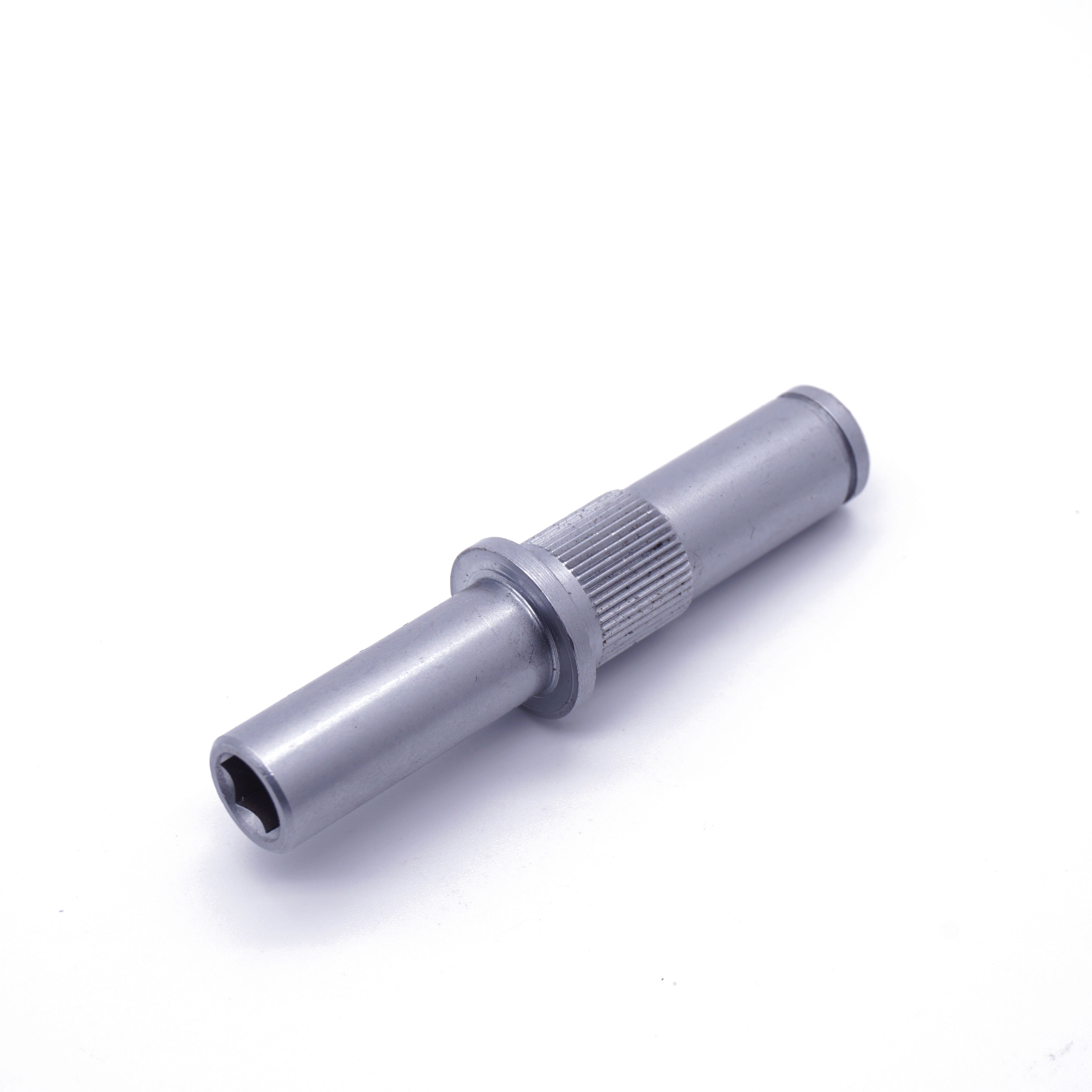
Let us evaluate a highly practical use case. Imagine a CNC machined fan shaft. This industrial component operates under high RPM continuously. It also experiences significant radial load from heavy fan blades. You must evaluate fatigue strength carefully during the design phase. Torsional stress determines whether the material survives long-term operation.
Under heavy torque and rapid acceleration, 6061 might warp. It could shear entirely if the load spikes unexpectedly. It simply lacks the yield strength for extreme rotational torque. In this critical scenario, 7075 becomes strictly required. Its superior yield strength prevents catastrophic failure. It maintains tight bearing fit tolerances despite immense operational stress. The higher cost becomes entirely justified to prevent system breakdown.
Post-Processing: Anodizing, Welding, and Corrosion Resistance
Secondary operations often ruin poorly planned manufacturing projects. Welding constraints present a major implementation risk for engineers. Alloy 7075 is highly prone to micro-cracking when welded. The localized heat destroys its delicate internal grain structure. The rapid cooling cycle causes invisible internal fractures. If your structural part requires welding, 6061 becomes the mandatory choice. It welds beautifully using standard TIG or MIG processes.
Anodizing differences also require your immediate attention. Both materials take Type II and Type III hardcoat anodizing very well. They offer excellent protective layers against external abrasion. They also accept standard black anodizing without issue.
However, clear-anodized 7075 can exhibit frustrating visual flaws. It often shows a slightly yellowish or darker tint. This subtle discoloration happens due to its high zinc content. Zinc reacts differently in the acid bath. This matters deeply for highly cosmetic consumer parts. If you need a flawless clear silver finish, choose 6061.
Corrosion resistance separates them further in harsh environments. We frame 6061 as naturally superior for bare exposure. It handles atmospheric moisture exceptionally well. It survives marine environments reliably without extensive coatings. Its lack of copper and zinc keeps oxidation at bay.
Meanwhile, bare 7075 rusts and degrades much faster. It reacts poorly to salty air or continuous humidity. It requires anodizing or paint to survive outdoors long-term. You must factor this coating cost into your project.
Conclusion
Let us revisit our shortlisting logic for metal selection. For most general engineering tasks, 6061 serves perfectly well. It remains the default choice for roughly 80% of CNC projects. It balances cost, machinability, and baseline strength beautifully.
Meanwhile, 7075 serves as a highly specialized engineering choice. It fits the remaining 20% of projects perfectly. Use it where extreme strength-to-weight ratios prove strictly critical. Evaluating 7075 Aluminum vs 6061 Aluminum is a choice of optimization. You optimize for either budget or absolute performance.
Take immediate next-step actions for your upcoming project. We encourage engineers to upload their CAD files today. Request a comprehensive DFM (Design for Manufacturability) review immediately. Advise your purchasing team to request dual material quotes. Ask for one quote in 6061 and one in 7075. This reveals the exact price delta for your specific geometry.
FAQ
Q: Can I substitute 2024 aluminum for 7075 in CNC machining?
A: Yes, but understand the trade-offs carefully. Alloy 2024 represents a third common aerospace grade. It features excellent fatigue resistance for cyclic loads. However, it offers much poorer corrosion resistance compared to 7075. You must apply specialized coatings if exposing 2024 to moisture. Choose 7075 for better all-around environmental stability.
Q: Does 7075 aluminum hold tight tolerances better than 6061?
A: Yes. Material stability heavily impacts precision machining outcomes. The extreme hardness of 7075 resists tool deflection naturally. It does not compress or smear easily under heavy cutting forces. This allows experienced machinists to achieve and hold incredibly tight geometric tolerances repeatedly during long production runs.
Q: Is it harder to tap threads into 7075 vs 6061?
A: The hardness of 7075 actually improves threading operations. It cuts cleanly and creates highly durable internal threads. Alloy 6061 sometimes acts gummy during tapping. This can cause torn or rough threads if unoptimized. However, 7075 requires stronger taps and may require thread inserts for extreme wear applications.