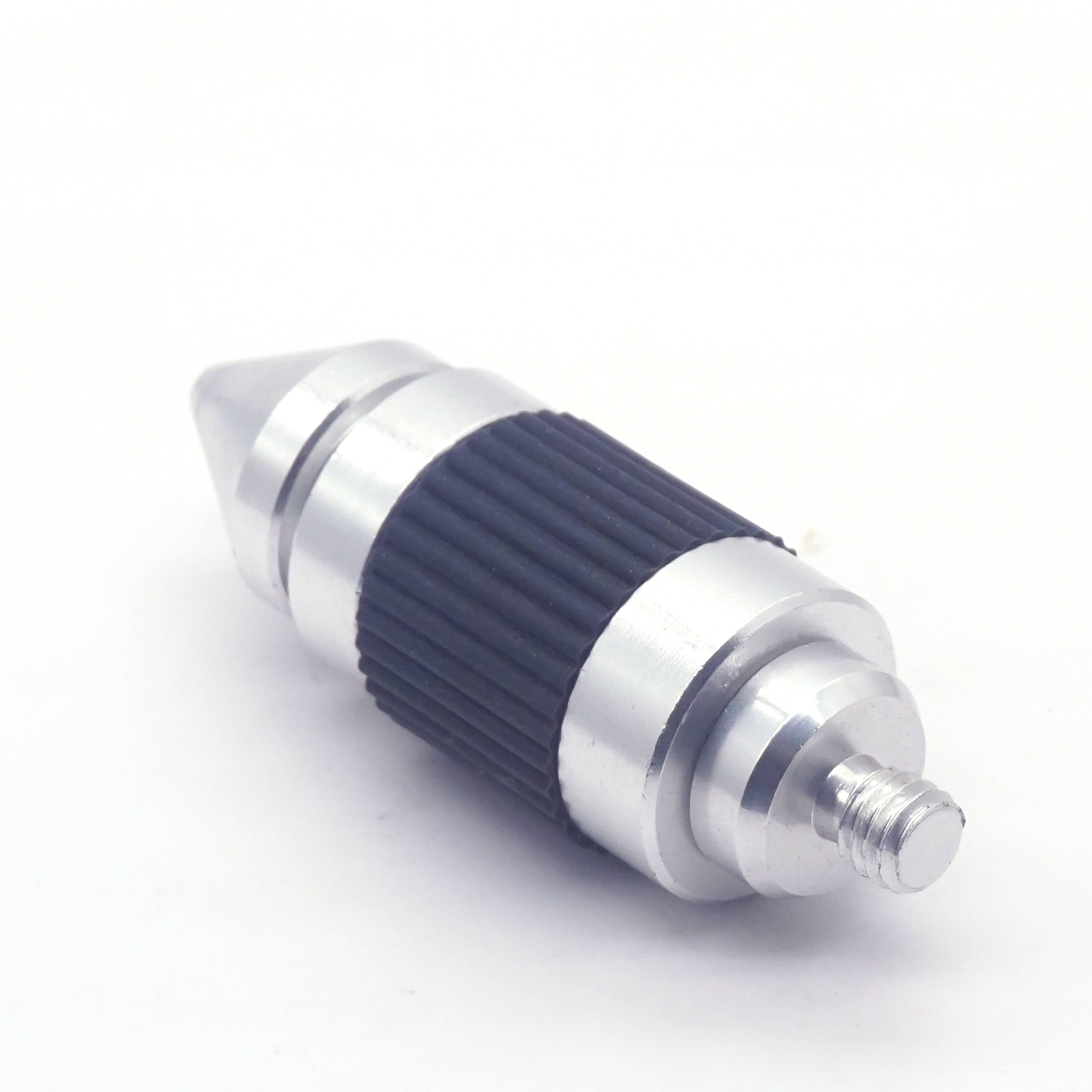
Not all pins are the same. Using the wrong mechanical or retaining pin leads to catastrophic assembly failure. Improper pin selection introduces hidden mechanical liabilities. It drives vibration back-out, material galling, and compromised structural integrity over the lifespan of an assembly. Engineering and procurement teams constantly face a trade-off. They must choose between the precise alignment capabilities of smooth pins and the aggressive retention profiles of knurled alternatives. Selecting the wrong pin type directly dictates assembly retention strength, host material integrity, and long-term reliability in the field.
We need a rigorous technical evaluation framework. Comparing the retention mechanisms, material compatibility, and manufacturing tolerances of a knurled pin versus a standard smooth pin guides optimal component specification. Understanding how these components interact with host materials under varying stress loads prevents premature mechanical failures.
Retention Mechanism: Smooth pins rely strictly on friction and radial tension (interference fit), while knurled pins utilize material displacement and broaching for superior pull-out and rotational resistance.
Tolerance Forgiveness: Knurled profiles accommodate wider hole tolerances, reducing precision machining costs in the host material compared to the strict requirements of smooth pins.
Material Compatibility: Smooth pins are ideal for hard, rigid host materials where precision alignment is critical; knurled pins excel in softer materials (plastics, aluminum, castings) where material flow secures the joint.
Application Focus: Choose smooth pins for precise locating and shear strength; specify knurled pins when permanent retention, electrical connector stability, and resistance to vibration are the primary success criteria.
The Mechanics of Pin Retention: Structural Differences
Defining the Baseline: Smooth Pins and Interference Fits
The mechanics of a standard industrial dowel pin rely entirely on a press-fit or shrink-fit installation. This method requires the pin diameter to be marginally larger than the host hole. When driven into the assembly, the smooth pin forces the host material to expand elastically. This expansion generates high radial tension, creating the surface friction necessary to hold the pin in place. The entire retention force depends on the host material's ability to maintain this compressive stress without yielding or cracking.
Generating this radial tension places significant stress on the host material. If the interference is too high, brittle materials will fracture. Ductile materials will permanently deform, resulting in a total loss of retention. The primary use case for smooth pins remains precision alignment and high shear load capacity. They act as exact locating devices between mating components. They are not designed to resist heavy axial pull-out forces or severe rotational torque.
To achieve a successful interference fit with a smooth pin, engineers typically follow strict installation parameters:
Calculate the exact interference required based on the host material's modulus of elasticity.
Machine the host hole to a precise tolerance, often requiring a secondary reaming operation.
Apply a controlled, linear press force to seat the pin without inducing bending moments.
Verify that the resulting hoop stress does not exceed the yield strength of the surrounding material.
The Knurled Pin Advantage: Material Displacement
Knurled pins operate on a fundamentally different mechanical principle. Instead of relying solely on radial tension, the ridges cut or compress directly into the host material during installation. The knurl pattern creates an effective diameter that is larger than the nominal pin body. As the pin enters the hole, these raised ridges force the host material into the valleys between the knurls.
The interaction varies based on the hardness of the host material. In harder materials, the knurls act like a broaching tool, physically cutting grooves into the hole wall. In softer materials like aluminum or thermoplastics, the process induces plastic deformation. The host material cold-flows around the knurl profile. This expansion of the pin's effective diameter creates localized interlocking zones. These physical barriers drastically increase both axial pull-out resistance and rotational retention, far exceeding the friction-based holding power of a smooth pin.
Alternative Retention Designs: Grooved vs. Knurled Pins
Engineers often evaluate grooved pins alongside knurled options. Grooved pins feature longitudinal swaged grooves that expand the pin material outward. During insertion, the pin itself compresses elastically to fit the hole. The retention relies on the elastic recovery of the pin material pushing outward against the hole walls. This creates localized zones of radial force, typically in three distinct lines along the pin shaft.
Knurled pins offer superior 360-degree rotational resistance compared to this localized radial force. Because the knurl pattern covers the entire circumference of the engagement area, it creates a continuous interlocking interface with the host material. Grooved pins can slip if rotational torque exceeds the friction at their specific contact points. Knurled profiles physically block rotation in all directions, making them the superior choice for components subjected to torsional loads.
Pin Type
Primary Retention Mechanism
Rotational Resistance
Hole Tolerance Requirement
Smooth Dowel Pin
Friction via radial tension
Low (relies on friction)
Very Tight (Reamed)
Grooved Pin
Elastic recovery of the pin
Moderate (localized contact)
Moderate (Drilled)
Knurled Pin
Material displacement / interlocking
High (360-degree mechanical lock)
Loose (Drilled)
Evaluating Host Material Compatibility
Hard Metals and Precision Tolerances
Using knurled profiles in hardened steel or high-strength alloys introduces specific mechanical risks. When the host material approaches or exceeds the hardness of the pin, the knurls cannot easily displace or cut into the hole wall. This leads to severe galling, where friction causes localized cold welding and tearing of the metal surfaces. Insertion forces spike unpredictably, often resulting in the pin shearing or bending before reaching its seated depth.
Smooth pins remain the industry standard for hardened, high-tolerance assemblies. Hard metals can sustain the high radial tension required for a secure interference fit without yielding. The smooth surface ensures a predictable insertion force and prevents the destructive galling associated with forcing a textured profile into an unyielding hole. For precise locating in tool steel or cast iron, smooth pins deliver repeatable accuracy.
Plastics, Castings, and Softer Alloys
Softer materials present a unique challenge. They tend to relax over time under continuous stress. This phenomenon, known as creep, causes the radial tension holding a smooth pin to decay. As the plastic or soft aluminum yields to the constant outward pressure, the hole permanently enlarges. The smooth pin eventually backs out under minimal vibration.
Specifying a precision knurled metal pin directly mitigates the effects of material creep. Instead of fighting the material's tendency to flow, the knurl utilizes it. The softer host material flows into the knurl valleys, creating a permanent mechanical lock. Even if the material relaxes, the physical interlocking prevents axial movement. Furthermore, knurled profiles absorb dimensional shifts caused by thermal expansion mismatches much better than smooth profiles, maintaining joint integrity across wide temperature fluctuations.
Specialized Applications: Electrical Connectors and Housings
Electrical connector designs rely heavily on precise contact pin shape and robust retention within plastic or composite housings. A brass knurled dowel pin is frequently utilized in these environments. The pins must remain absolutely stationary during the repeated mating and unmating cycles of the connector assembly.
Brass offers the necessary electrical conductivity and natural corrosion resistance required for signal and power transmission. The integrated knurl ensures the pin will not push back into the housing during connector mating. The straight or helical ridges bite into the dielectric plastic, securing the terminal permanently. This combination of material properties and mechanical retention prevents intermittent electrical faults caused by loose contact pins.
Performance Dimensions: Features-to-Outcomes
Pull-Out and Rotational Resistance
Axial pull-out force metrics reveal a stark contrast between smooth and knurled pins of identical nominal diameters. A smooth pin relies entirely on surface friction. Its pull-out resistance is a direct function of the interference fit and the coefficient of friction between the two materials. Once static friction is overcome, the pin slides out easily. Knurled pins require the host material to physically shear or deform before the pin can be extracted. This results in pull-out forces that are often multiples higher than smooth equivalents.
Specific knurl patterns dictate the exact nature of this resistance. Straight knurls feature ridges parallel to the pin axis, offering exceptional resistance to rotational torque but moderate axial pull-out resistance. Helical knurls angle the ridges, providing a balanced combination of both rotational and axial locking. Diamond knurls feature an intersecting cross-pattern that delivers maximum resistance in all directions, though they demand the highest insertion forces and displace the most host material.
Knurl Pattern
Axial Pull-Out Resistance
Rotational Torque Resistance
Typical Application
Straight
Moderate
Excellent
Preventing gear or knob rotation on a shaft
Helical
High
High
General purpose retention in die castings
Diamond
Maximum
Maximum
Permanent embedment in injection molded plastics
Vibration Tolerance and Fatigue Life
High-vibration environments ruthlessly expose the weaknesses of friction-based joints. Smooth pins are susceptible to micro-movements when subjected to continuous harmonic resonance or shock loads. These microscopic shifts degrade the interface, leading to fretting corrosion and a gradual loss of radial tension. Eventually, the smooth pin backs out of the assembly entirely.
The interlocking nature of a knurled pin actively prevents these micro-movements. Because the ridges are physically embedded within the host material, there is no space for the pin to shift. This rigid mechanical lock eliminates the friction-wear cycle that causes fretting. Consequently, knurled pins exhibit a significantly longer fatigue life in applications involving heavy machinery, automotive assemblies, and aerospace components.
Assembly Force and Installation Stress
Insertion force requirements differ drastically between the two pin types. Smooth pins require a highly controlled, linear press force to overcome the initial interference without buckling the pin. The radial stress exerted on the host material peaks immediately and remains constant. This constant outward pressure poses a severe risk of fracturing brittle plastics or splitting thin-walled castings.
Knurled pins generally exert lower continuous radial stress. The insertion force is expended on cutting or displacing the host material rather than stretching the entire hole circumference. Once seated, the residual stress is lower because the material has flowed into the knurl valleys. This makes knurled pins much safer for thin-walled hubs and brittle polymer housings where a standard interference fit would cause immediate cracking.
Manufacturing, Cost, and Scalability Considerations
Tolerance Forgiveness and Hole Preparation
Hole preparation drives a significant portion of assembly costs. Smooth pins demand reamed, high-tolerance holes, often requiring precision within +/- 0.0005 inches. Achieving this level of accuracy necessitates secondary machining operations. The hole must be drilled undersize and then carefully reamed to the final dimension. Any deviation results in either a loose pin or a cracked housing.
Knurled pins offer substantial tolerance forgiveness. They can typically be pressed into standard drilled holes with much wider tolerance bands. The knurls compensate for minor dimensional variations by simply displacing slightly more or less material during insertion. Eliminating the reaming operation reduces cycle times, lowers tooling costs, and accelerates overall production throughput without sacrificing retention strength.
Production Methods: CNC Machined vs. Cold-Headed
The manufacturing method directly impacts the sharpness of the knurl and the resulting retention performance. Mass-produced cold-headed pins are formed by striking wire stock into a die. While highly efficient, this process often results in rounded knurl crests and shallow valleys. The rounded profile displaces material less effectively, reducing the overall interlocking strength.
Evaluating a CNC machined knurled pin reveals superior structural integrity and precision. CNC turning allows for exact control over the knurl pitch, depth, and crest sharpness. A sharp, well-defined knurl cuts into the host material cleanly, maximizing pull-out resistance. For critical applications where retention cannot be compromised, machined pins provide the necessary geometric consistency.
Vendor Selection, Fit Checks, and Quality Control
Sourcing reliable components requires strict evaluation of a knurled pin manufacturer. Key criteria include comprehensive material certifications, verifiable knurl pitch consistency across production runs, and strict lot traceability. Inconsistent knurl diameters lead directly to erratic insertion forces and unpredictable assembly yields on the factory floor.
Requiring supplier evidence and importer sample approval for fit checks is mandatory before authorizing mass production. This is especially critical for plastic assemblies, where minor changes in knurl geometry drastically alter material flow and retention. Engineers must test physical samples in the actual host material to validate insertion forces. When off-the-shelf standards fail to meet specific assembly requirements, specifying custom locating pin dimensions ensures the exact balance of alignment precision and retention strength.
Implementation Risks and Mitigation Strategies
Galling and Material Shearing
A primary implementation risk occurs when the knurls act as a reamer rather than a fastener. If the pilot hole is severely undersized, or if the host material is too hard, the knurls will shear the material away entirely during insertion. Instead of interlocking, the pin destroys the hole wall, leaving a smooth, oversized cavity with zero retention.
Mitigating this risk requires specifying the correct knurl type and conducting rigorous insertion force testing. Straight knurls are generally preferred for plastics to allow material flow, while helical knurls are better suited for light metals. Engineers must establish a strict tolerance band for the pilot hole and verify that the insertion equipment applies steady, linear force without inducing off-axis wobble that could ream the hole.
Reusability and Serviceability
Knurled pins permanently alter the host hole. The broaching or plastic deformation required for installation means the hole geometry is fundamentally changed. Extracting the pin strips the interlocking material away. Consequently, knurled pins are generally unsuitable for assemblies requiring frequent disassembly or routine maintenance.
To mitigate serviceability issues, engineers must classify the joint type early in the design phase. Use smooth pins for serviceable joints where components must be separated and reassembled without degrading the host material. Reserve knurled pins strictly for permanent, press-and-forget applications where the assembly will remain intact for its entire operational lifecycle.
Conclusion
The choice between a knurled pin and a smooth pin hinges entirely on the primary function of the mechanical joint. Smooth pins remain optimal for precise alignment and high shear strength in hard materials where tight tolerances can be maintained. Conversely, knurled pins deliver superior axial retention, vibration resistance, and rotational locking in softer materials or applications utilizing wider-tolerance drilled holes.
Base the final component decision on a strict evaluation of host material hardness, required pull-out force, acceptable hole preparation costs, and whether the joint requires future disassembly. Misaligning the pin type with these variables guarantees suboptimal performance and increases the risk of field failures.
To finalize the assembly design, execute the following steps:
Prototype both pin types in the exact host material to observe interaction behavior.
Perform empirical pull-out and vibration testing to establish baseline retention metrics.
Analyze the cost difference between reaming holes for smooth pins versus drilling holes for knurled variants.
Consult with a specialized custom pin manufacturer to finalize tolerances, knurl specifications, and secure sample approvals before scaling to mass production.
FAQ
Q: What is the primary function of a knurled pin?
A: To provide superior axial and rotational retention in an assembly by displacing host material into the knurl valleys, preventing back-out under vibration.
Q: Do knurled pins require tighter hole tolerances than smooth pins?
A: No, knurled pins generally accept wider hole tolerances because the knurls deform or cut into the material, compensating for minor dimensional variations, whereas smooth pins require precise, reamed holes for proper interference fit.
Q: How do knurled pins compare to grooved pins for plastic assemblies?
A: While both are used in plastics, grooved pins rely on the elastic recovery of the pin itself to create radial tension. Knurled pins displace the plastic host material into their ridges, offering significantly higher resistance to rotational forces.
Q: Can a precision knurled metal pin be reused after extraction?
A: Generally no. Extracting a knurled pin strips or enlarges the host hole. Reinserting a pin into the same hole will result in significantly reduced retention force.
Q: What is the difference between straight, helical, and diamond knurls on a pin?
A: Straight knurls resist rotational movement, helical knurls offer a balance of rotational and pull-out resistance, and diamond knurls provide maximum resistance in all directions but require the highest insertion force.
Q: When should I use a brass knurled dowel pin instead of a steel one?
A: Brass is ideal for use in plastic assemblies or electrical connector applications where corrosion resistance, non-magnetic properties, or conductivity are required alongside strong retention.
Q: How does a knurled pin prevent rotational movement compared to a smooth pin?
A: The longitudinal ridges of the knurl embed into the host material, creating physical barriers (interlocking) against torque, whereas a smooth pin relies entirely on surface friction, which can slip under high rotational loads.