Choosing a metal for a machined component is rarely as simple as selecting the strongest or least expensive option. A grade that performs well in service may be difficult to machine, unstable around thin walls, incompatible with the intended finish, or unnecessarily costly for the required production volume.
A better decision starts with the part’s loads, operating environment, geometry, tolerances, and secondary processes. By comparing these requirements with the properties and machining behavior of common alloys, buyers and engineers can narrow the options and select CNC machined metal parts that balance performance, production reliability, and total cost.
Define What the Part Must Do
Separate Essential Requirements from Preferences
Start by identifying how the component could fail. A mounting bracket may bend under a static load, a rotating fitting may experience fatigue, and a threaded connector may lose function through galling, corrosion, or repeated assembly. Components exposed to vibration, impact, sliding contact, fluctuating temperatures, saltwater, cleaning chemicals, or outdoor moisture each demand a different balance of properties.
Divide the requirements into non-negotiable conditions and useful preferences. A minimum yield strength, operating-temperature range, or resistance to a particular chemical may be essential. Low weight, a polished appearance, or reduced material cost may be desirable but should not override the conditions needed for safe and reliable operation.
This ranking prevents over-specification. Choosing the strongest alloy available can increase stock cost, tool wear, cycle time, and finishing difficulty without improving the part’s actual performance. Similarly, selecting premium stainless steel for a dry indoor assembly may add expense when a protected carbon steel or aluminum grade would meet the functional need.
Translate the Application into Measurable Properties
Broad descriptions such as “strong,” “lightweight,” or “corrosion resistant” are not enough for comparing materials. Convert them into measurable or clearly defined requirements. Relevant properties may include tensile and yield strength, hardness, toughness, fatigue resistance, wear resistance, thermal expansion, thermal conductivity, electrical conductivity, and resistance to specific corrosive media.
The operating context should also be quantified where possible. Record the maximum and minimum temperatures, loading direction, loading frequency, contact pressure, humidity, exposure duration, target service life, and number of expected assembly cycles. For corrosive applications, identify the actual fluid, chemical concentration, cleaning method, or salt exposure rather than requesting generic corrosion resistance.
Before comparing alloys, prepare a compact requirements checklist:
●Primary function and likely failure mode
●Required strength, stiffness, hardness, or wear resistance
●Operating temperature and thermal cycling
●Exposure to water, salt, chemicals, or cleaning agents
●Weight, conductivity, magnetic, and appearance requirements
●Target service life and expected production quantity
These details help a machining supplier distinguish functional requirements from optional improvements and reduce the risk of recommending an unnecessarily expensive metal.
Build a Shortlist of Suitable Metal Families
Aluminum or Steel for Structural Parts
Aluminum is often the first candidate when low weight, corrosion resistance, thermal performance, and machining efficiency matter. Many 6xxx-series aluminum alloys combine moderate strength, useful corrosion resistance, formability, weldability, and reliable machinability. These characteristics make aluminum suitable for housings, brackets, adapters, enclosures, fixtures, and heat-management components.
Steel becomes more attractive when the component requires greater stiffness, load capacity, impact resistance, surface hardness, or wear performance. Carbon and alloy steels can also provide several heat-treatment options, allowing the manufacturer to machine the component in one condition and develop higher hardness or strength later. However, the final decision must account for weight, corrosion protection, treatment distortion, and the possible need for grinding after hardening.
Neither “aluminum” nor “steel” is a complete purchasing specification. Aluminum should include the grade and temper, while steel should include the grade, supplied condition, target hardness, and heat-treatment route. These details influence machining behavior, dimensional stability, inspection, and final performance.
Stainless Steel, Brass, or Copper for Fittings and Functional Interfaces
Stainless steel is frequently considered for components exposed to moisture, cleaning agents, process fluids, or environments where long-term corrosion resistance and surface cleanliness are important. Grade selection should follow the actual environment. Type 316 generally provides greater resistance than Type 304 in more demanding chloride-containing conditions because of its molybdenum content.
Brass is often suitable for threaded fittings, precision turned components, valves, connectors, and parts requiring clean chip formation or detailed screw-machine features. Free-cutting brass grades combine high machinability with useful strength and corrosion resistance, making them practical for repeat production of intricate turned parts.
Copper should be considered when electrical or thermal conductivity is central to the component’s function. Pure and high-conductivity copper grades may be more difficult to machine cleanly than free-cutting brass because ductile material can produce burrs, smearing, and less predictable chip control. Copper alloys designed for machining may offer a more practical balance when the application can accept lower conductivity in exchange for improved production efficiency.
When a Specialized Alloy Is Worth the Added Cost
Titanium and high-temperature alloys belong on the shortlist only when documented operating requirements exclude more economical materials. Titanium can provide a valuable combination of low weight, strength, toughness, and corrosion resistance in demanding marine, aerospace, medical, and high-reliability applications.
Those benefits come with higher stock costs, slower material removal, greater tooling demands, and more limited sourcing options. Specialized alloys should therefore solve a specific performance problem rather than serve as a general quality upgrade.
Metal family
Main reason to consider it
Trade-off to review
Confirm before selection
Aluminum alloys
Low weight, machinability, heat transfer
Lower stiffness or wear resistance than many steels
Extreme temperature, corrosion, or weight requirements
High stock and machining cost
Whether a standard alloy can meet the need
Check the Material Against the Actual Part Design
Review Features That Create Machining Risk
A material that performs well in a simple test coupon may behave differently when machined into a thin, deeply pocketed, or highly detailed component. Thin walls can deflect under cutting and clamping forces. Heavy material removal can release residual stress, while long shafts, narrow grooves, deep holes, and small internal threads can magnify chip-control, heat, and rigidity problems.
The risk also changes with the metal family. Austenitic stainless steels require machining practices that maintain effective cutting rather than rubbing, while soft copper can produce rolled burrs around holes and threads. Harder steels and titanium alloys may increase heat concentration and tool wear. Aluminum generally machines efficiently, yet thin plates or asymmetric housings may still move after substantial stock removal.
Part geometry should therefore be reviewed together with the intended process. Rotationally symmetrical components may favor CNC turning, while flats, cross-holes, pockets, or non-axisymmetric features may require milling or secondary operations. CNC turning is commonly used for parts such as pins, bushings, rods, shafts, fittings, and other rotational components, while more complex geometries may require multiple machining processes.
Apply the Decision to Precision Metal Fittings
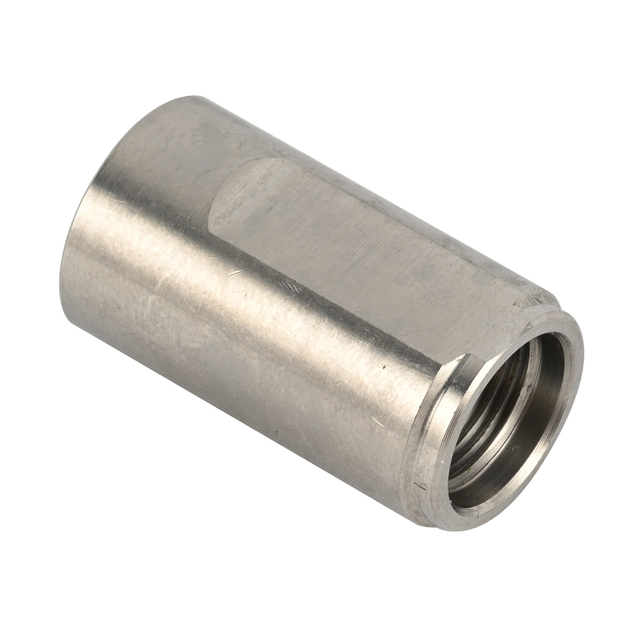
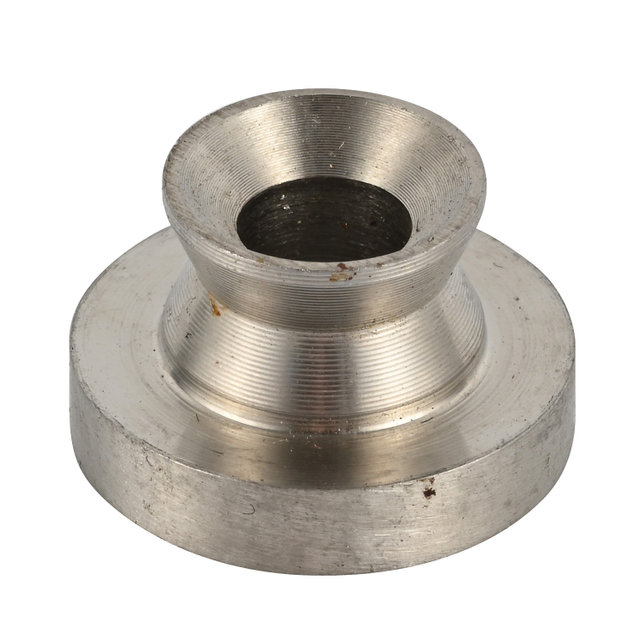
Consider HANYEE METAL’s precision CNC machined metal parts, where material selection must account for thread strength, sealing stability, corrosion exposure, and assembly conditions. Their appearance alone cannot determine the correct metal. A fitting used in a dry mechanical assembly may prioritize thread strength and machinability, whereas a visually similar part in a fluid system may require corrosion resistance, sealing stability, and compatibility with cleaning agents.
Brass may suit a complex turned fitting when clean machining, fine threads, and repeated production are important. Stainless steel may be more appropriate where corrosion exposure or cleaning requirements dominate. Carbon or alloy steel can serve a heavily loaded fitting when protective plating or another corrosion-control method is acceptable. Aluminum may be considered where low mass matters and the threads, loads, and sealing conditions remain within the selected alloy’s capability.
The review must include thread engagement, tightening load, mating material, sealing face, concentricity, pressure or mechanical load, surface treatment, and expected assembly cycles. Carbon steel, stainless steel, brass, and aluminum can all be suitable for precision fittings, but they should be treated as application-dependent options rather than interchangeable materials.
Plan Tolerances and Finishing Before Production
Match Tolerances to Material Stability
The same tolerance does not create the same manufacturing difficulty in every metal. A tight bore in aluminum, a long diameter in stainless steel, and a small thread in copper each respond differently to cutting heat, clamping, burr formation, and post-machining recovery. Tolerance planning should focus on the features that control function: bearing seats, mating diameters, sealing faces, thread fits, flat mounting surfaces, and concentric turned sections.
Applying tight tolerances to every drawing dimension usually raises inspection time, machining cost, and scrap risk without improving the assembly. Mark critical-to-function dimensions clearly and allow broader tolerances elsewhere. Temperature should also be considered when the component, workshop, or inspection process involves meaningful thermal variation.
Treat Heat Treatment as Part of the Machining Route
Heat treatment can change hardness, machinability, residual stress, dimensional stability, and the amount of material reserved for final grinding. Some steel components are rough-machined before hardening and finished afterward. Precipitation-hardening stainless steels may be machined in a solution-treated condition and subsequently aged to develop the required mechanical properties.
The drawing and purchase order should state the grade, initial condition, required final hardness, treatment sequence, and dimensions that apply after treatment. Masking, case depth, grinding allowance, and post-treatment inspection should also be defined where relevant.
Confirm Surface-Finish Compatibility Early
Surface treatment affects more than appearance. Anodizing, plating, passivation, polishing, black oxide, and painting may change dimensions, friction, corrosion performance, electrical contact, and thread fit. Coating allowance should be considered before finalizing holes, bearing seats, mating diameters, and threaded features.
Stainless steel components may require cleaning or passivation after machining to remove contamination and support the protective surface condition. Passivation, pickling, electropolishing, and mechanical cleaning serve different purposes and should be selected according to the required surface condition.
Specify which surfaces need treatment, which must remain uncoated, and whether appearance must be consistent across the production batch. Finishing should form part of the manufacturing route from the quotation stage, not be added after machining decisions have already fixed the dimensions.
Compare the Finished-Part Cost and Finalize the Specification
The finished cost of CNC machined metal parts includes much more than the price of bar, plate, or billet. Setup and programming, cycle time, tooling, deburring, heat treatment, surface finishing, inspection, rework, scrap, and packaging can outweigh small differences in raw stock cost. A moderately more expensive alloy may produce a lower finished price when it machines faster, forms controllable chips, requires less finishing, or reduces rejected parts.
Production quantity changes the calculation. Tooling or fixture investment may be difficult to justify for a prototype but economical across thousands of components. Standard stock dimensions can reduce waste, while unusual diameters, tempers, hardness conditions, or certified materials may extend lead time and require larger purchase quantities.
Availability also deserves early attention. A proposed grade should be checked against actual supply, standard stock forms, quantity requirements, and available machining capability before the drawing is released.
When two materials appear technically suitable, request quotations for both under the same drawing, quantity, finishing, and inspection conditions. Compare the completed manufacturing route rather than the price per kilogram.
Conclusion
Choosing the right material for CNC machined metal parts means balancing strength, corrosion resistance, machinability, dimensional stability, finishing requirements, and total production cost. A reliable specification should connect the alloy grade and condition with the part’s loads, environment, geometry, tolerances, and inspection needs.
Ningbo Hanyue Metal Products Co., Ltd. supports custom CNC machining across a range of metals and alloys, helping customers evaluate material options alongside tooling, production, and finishing requirements. This coordinated approach can reduce avoidable machining problems, improve part consistency, and support more practical decisions for prototypes and repeat production.
FAQ
Q: What is the best material for CNC machined metal parts?
A: There is no universal best material. The right choice depends on required strength, weight, corrosion resistance, operating temperature, tolerances, finishing needs, and production cost.
Q: Which metals are most commonly used in CNC machining?
A: Common choices include aluminum, carbon steel, stainless steel, brass, copper, and titanium. Each provides a different balance of machinability, strength, conductivity, corrosion resistance, and cost.
Q: Is aluminum or stainless steel better for CNC parts?
A: Aluminum suits lightweight, easily machined components, while stainless steel offers greater corrosion resistance and durability. The better option depends on loads, environment, weight limits, and service life.
Q: How does machinability affect the cost of CNC parts?
A: Difficult materials require slower cutting, specialized tooling, and more frequent tool replacement. These factors increase machining time, inspection needs, production risk, and the finished component’s total cost.
Q: Do tight tolerances influence material selection?
A: Yes. Materials respond differently to cutting heat, clamping, stress release, and finishing. Dimensionally stable materials generally make demanding fits, thin walls, and precision features easier to control.
Q: Should surface finishing be considered before choosing a metal?
A: Yes. Anodizing, plating, passivation, polishing, and heat treatment can affect dimensions, corrosion performance, threads, mating surfaces, and appearance, so they should be planned before production.